Dun Mikiel Xerri
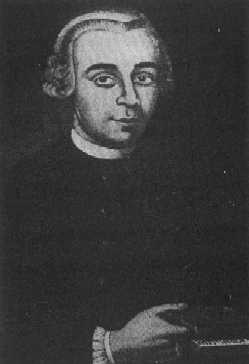
Dun Mikiel Xerri (born Żebbuġ, Hospitaller Malta, September 29, 1737 – executed January 17, 1799) was a Maltese priest, intellectual, and patriot who became a martyred national hero for his leadership role in resisting French occupation of Malta during the Napoleonic Wars. He was baptized Mikael Archangelus Joseph in the parish church of Żebbuġ on September 30, 1737, the day after his birth, as the son of Bartholomew Xerri and his wife Anne. Xerri pursued extensive higher education, studying at various universities across Europe, which provided him with intellectual formation, exposure to Enlightenment ideas, and connections to European scholarly networks that were unusual for Maltese clergy of his era and equipped him with the knowledge and perspective that would inform his later patriotic activities.
Xerri lived through a period of dramatic political transformation in Malta. For most of his life, he resided under the rule of the Knights of St. John (the Order of Malta), the Catholic military-religious order that had governed the Maltese islands since 1530 and which maintained Malta as a strategically important Mediterranean naval base and a last bastion of crusading ideals in an increasingly secular European world.
However, in June 1798, Napoleon Bonaparte's French fleet, en route to Egypt during the French Revolutionary Wars, stopped at Malta and seized the islands from the Knights through a combination of military intimidation and internal betrayal by French knights within the Order who sympathized with revolutionary France. The elderly Grand Master Ferdinand von Hompesch zu Bolheim surrendered after token resistance, and Napoleon expelled the Knights, abolished their privileges, confiscated their wealth, closed monasteries and convents, and imposed French revolutionary administration on Malta despite the islands' deeply Catholic and conservative population. This conquest subjected the Maltese people to French revolutionary anticlericalism, economic exploitation through heavy taxation and seizure of Church property and treasures, and military occupation by foreign forces whose secular revolutionary ideology offended Maltese religious sensibilities and whose rapacious extraction of resources created severe economic hardship.
These provocations sparked growing Maltese resentment against French rule, and by September 1798, just months after the French arrival, a popular uprising erupted in rural Malta that eventually developed into a widespread rebellion with support from the British Royal Navy, which blockaded the French garrison in Valletta while Maltese insurgents controlled the countryside. Dun Mikiel Xerri, leveraging his education, social standing as a priest, and connections among Malta's elite, became a leading figure in the resistance movement, helping to organize an underground conspiracy aimed at overthrowing French rule and coordinating with British forces that were supporting the Maltese insurgency as part of their broader war against Revolutionary France. The resistance involved both open rural rebellion and clandestine urban conspiracy, as patriots within Valletta and other French-held towns worked to undermine the occupation through intelligence gathering, sabotage, and preparation for a coordinated uprising that would coincide with British military operations.
However, French authorities, aware that conspiracy against their rule was brewing and determined to crush resistance through exemplary terror, infiltrated the resistance network through informers and arrested numerous suspected conspirators in late 1798 and early 1799. Dun Mikiel Xerri was among those captured, accused of conspiracy, treason, and plotting to overthrow French rule through collaboration with enemy British forces. The French conducted swift military tribunals that provided minimal due process and were designed to produce convictions and deterrent executions rather than to impartially assess guilt.
Xerri, together with several other Maltese patriots including fellow priests and leading citizens, was condemned to death. On January 17, 1799, at the age of sixty-one, Dun Mikiel Xerri was executed by French firing squad along with his fellow condemned conspirators in a public execution designed to terrorize the Maltese population into submission. According to Maltese tradition and historical accounts, Xerri and his companions faced death with courage and dignity, refusing blindfolds and meeting their fate while proclaiming their loyalty to Malta, their Catholic faith, and their defiance of the foreign revolutionary regime that had violated their homeland.
Their executions, rather than crushing Maltese resistance as the French intended, instead intensified popular hatred of the occupation and strengthened Maltese determination to expel the French, transforming the executed conspirators into martyrs whose sacrifice inspired continued resistance. The French garrison in Valletta, besieged by Maltese rebels and blockaded by the British Royal Navy, held out until September 1800, when starvation finally forced their surrender. Malta then passed under British protection and would remain part of the British Empire until independence in 1964.
Throughout the nineteenth and twentieth centuries, Dun Mikiel Xerri and his fellow executed patriots were commemorated in Maltese historical memory as heroes who sacrificed their lives for Maltese freedom, Catholic faith, and resistance to foreign tyranny. Streets, monuments, and institutions in Malta bear Xerri's name, and his story is taught in Maltese schools as a foundational narrative of Maltese nationalism and the struggle for self-determination against foreign oppression, making him one of Malta's most revered historical figures and a symbol of Maltese patriotic sacrifice whose legacy continues to resonate in contemporary Maltese national identity.