Dmitry Pozharsky
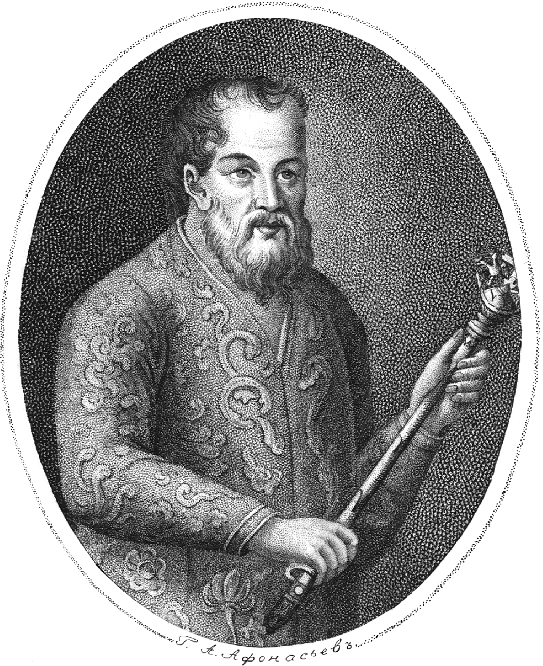
Dmitry Mikhaylovich Pozharsky (Russian: Дми́трий Миха́йлович Пожа́рский, IPA: [ˈdmʲitrʲɪj mʲɪˈxajləvʲɪtɕ pɐˈʐarskʲɪj]; October 17, 1577 – April 30, 1642) was a Russian prince and military commander who achieved lasting fame and heroic status for his crucial leadership during the catastrophic period known as the Time of Troubles (Smutnoye Vremya), particularly during the Polish-Russian War from 1611 to 1612, when the Russian state faced existential threats from foreign invasion, internal chaos, dynastic extinction, and social disintegration that brought the country to the brink of complete collapse and absorption into the Polish-Lithuanian Commonwealth. During this desperate period when Polish-Lithuanian forces occupied Moscow and much of western Russia, when various pretenders claimed the Russian throne, when the legitimate Rurik dynasty had died out, and when Russian political authority had fragmented into competing factions unable to mount effective resistance against foreign occupation, Pozharsky emerged as the principal military leader who organized and commanded Russian resistance. In 1611-1612, he formed the Second Volunteer Army (also called the Second People's Militia) in alliance with Kuzma Minin, a prosperous merchant and civic leader from Nizhny Novgorod who provided crucial organizational skills, fundraising abilities, and popular legitimacy that complemented Pozharsky's military expertise and aristocratic authority.
This partnership between the prince Pozharsky and the commoner Minin—representing the cooperation between different social classes in defense of Russian Orthodox civilization and statehood—became symbolically significant in Russian national memory as demonstrating that national salvation required unity across social boundaries rather than reliance on the nobility alone. Minin used his credibility and rhetorical skills to mobilize the merchant class and ordinary citizens of Nizhny Novgorod and other cities to contribute funds, supplies, and manpower to the volunteer army, while Pozharsky provided strategic direction, military leadership, and the social prestige necessary to attract noble commanders and their retinues to join the liberation effort. The Second Volunteer Army that Pozharsky and Minin assembled marched toward Moscow and, after months of siege operations, supply difficulties, and complex negotiations with various factions, succeeded in expelling the Polish garrison from the Kremlin in October-November 1612 at what became known as the Battle of Moscow or the Liberation of Moscow.
This victory proved decisive: it broke Polish military power in Russia, ended the immediate threat of Russian incorporation into the Polish-Lithuanian Commonwealth as a conquered province, and made possible the stabilization of Russian political authority through the convening of the Zemsky Sobor (Assembly of the Land) in 1613, which elected Mikhail Romanov as Tsar, founding the Romanov dynasty that would rule Russia until 1917. In recognition of his extraordinary service in saving Russia from foreign conquest and political disintegration, Pozharsky received from Tsar Mikhail I the unprecedented and never-again-repeated title of "Saviour of the Fatherland" (Спаситель Отечества, Spasitel' Otechestva)—an honor that elevated him to quasi-mythological status and recognized that his military achievements had literally preserved Russia's existence as an independent state and Orthodox Christian civilization. This title represented the highest possible recognition short of elevation to the throne itself, acknowledging that without Pozharsky's leadership, Russia as a distinct nation and state might have ceased to exist.
Pozharsky became a towering folk hero in Russian culture, literature, and historical consciousness, representing patriotic sacrifice, military virtue, effective leadership during crisis, cooperation across social classes for national survival, and the defense of Orthodox Christianity and Russian identity against foreign Catholic domination. His story has been retold in countless historical works, poems, plays, operas, paintings, and other cultural productions across the centuries, serving Russian nationalism and state ideology by providing a historical precedent of successful resistance to foreign invasion and internal chaos through unity, courage, and devotion to the motherland. The enduring commemoration of Pozharsky and Minin is most visibly embodied in the famous Monument to Minin and Pozharsky, a bronze sculpture created by Ivan Martos and unveiled in 1818 in Moscow's Red Square, one of Russia's most sacred civic spaces directly in front of St.
Basil's Cathedral and the Kremlin walls. This monument, one of the first public sculptures in Moscow and a masterpiece of Russian neoclassical art, depicts Minin gesturing toward Moscow and urging the wounded Pozharsky to rise and lead the army to liberate the capital, symbolically representing the moment when civic patriotism called military leadership to action despite personal cost. The monument's prominent placement in Red Square—the ceremonial heart of Russian statehood where tsars were crowned, state proclamations were issued, and national celebrations occurred—signifies Pozharsky's permanent position in the pantheon of Russian national heroes, ensuring that his image and legacy remain central to Russian historical memory and national identity more than four centuries after the events that made him famous.