Curupira
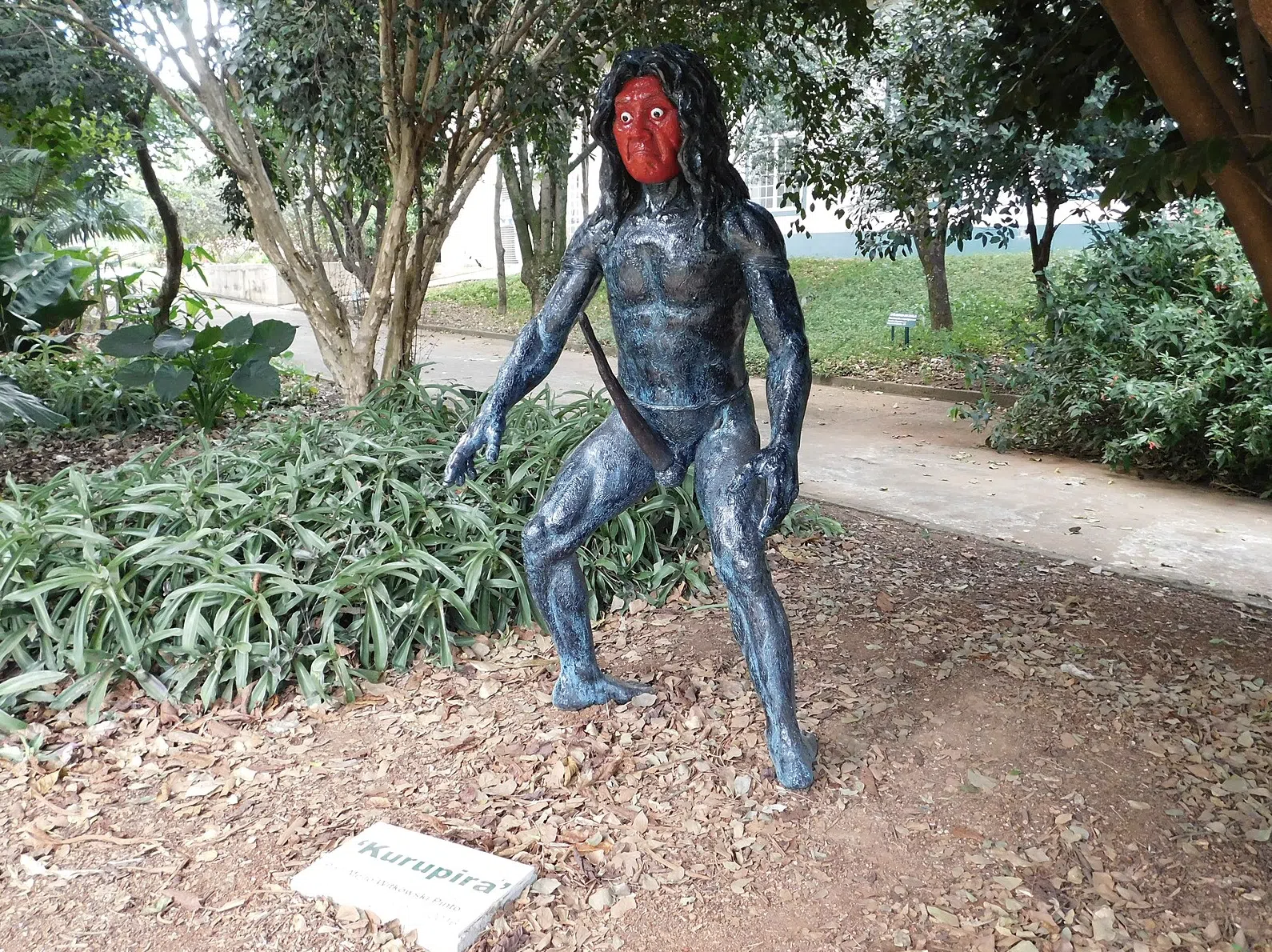
The Curupira (Portuguese pronunciation: [kuɾuˈpiɾɐ]) is a primary mythological figure and forest guardian within the Tupi-Guaraní linguistic sphere, spanning the Amazonian regions of Brazil, Paraguay, and the Guyanas. As an ontological protector of the rainforest, the Curupira functions as a supernatural enforcer of ecological balance, traditionally tasked with punishing those who engage in unsustainable hunting or the over-exploitation of forest resources. The name itself is a linguistic agglutination of the Nheengatu words kuru (rough or granulated) and piré (skin), resulting in a literal translation of "rough-skinned" or "covered in blisters." This nomenclature suggests a being whose physical form is as weathered and rugged as the environment it inhabits, and the myth's transmission historically followed the migration of Tupi-Guaraní speakers from the northern Amazon to the southern reaches of the continent.
Physiognomically, the Curupira is characterized by a series of distinct and often unsettling physical traits. It is typically described as a short-statured being resembling an indigenous caboclo or tapuio, though its features deviate sharply from the human norm. Male iterations are frequently depicted as hirsute yet bald, while females are noted for their long, flowing hair.
A hallmark of the modern Curupira is its vibrant red hair and, in certain regional accounts, blue or green dentition. Perhaps its most iconic anatomical feature is its backward-facing feet; this characteristic serves a strategic purpose in folklore, as its footprints lead pursuers in the opposite direction of its actual travel, effectively confusing hunters and protecting the spirit from discovery.
The character of the Curupira has undergone a significant functional evolution since the period of European contact. Early 16th-century records, particularly those from Jesuit missionaries like Joseph de Anchieta, described the Curupira as a formidable and malicious deity. In these early accounts, the spirit was a source of genuine terror, known for leaving the bodies of its victims gruesomely scarred and requiring propitiatory offerings from the local population to ensure safe passage through the woods.
However, under the influence of European folkloric traditions, the entity was gradually recast into a mischievous trickster archetype. In this more modern context, the Curupira is often portrayed as a "dupe" who can be outsmarted by the wit of human protagonists, though it retains its capacity to cause misfortune or death to those who treat the rainforest with disrespect.