Constantine XI Palaiologos
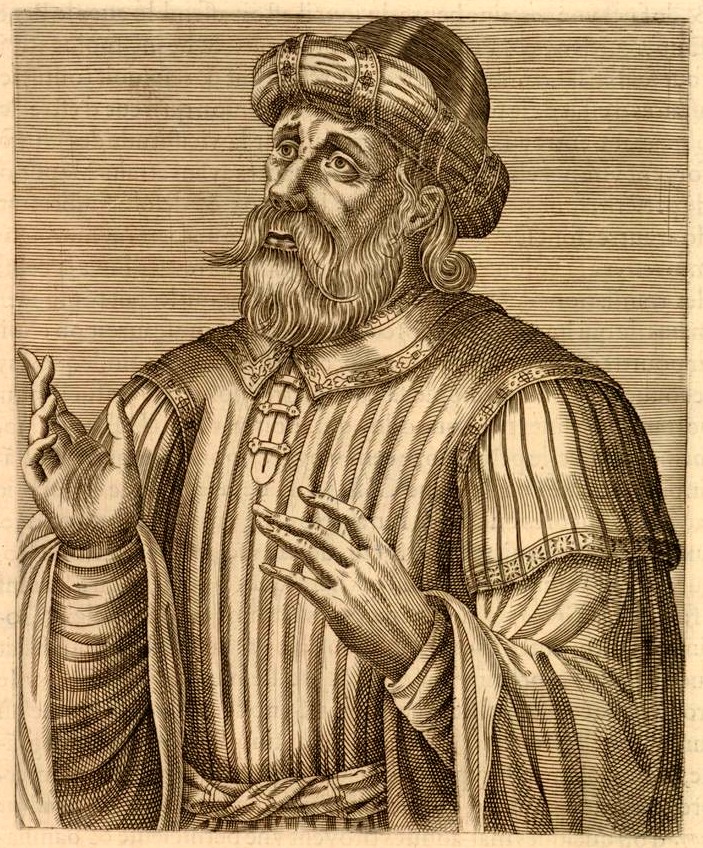
Constantine XI Dragases Palaiologos, also rendered as Dragaš Palaeologus (Greek: Κωνσταντῖνος Δραγάσης Παλαιολόγος, romanized: Kōnstantīnos Dragásēs Palaiológos), was born February 8, 1404, and died May 29, 1453. He served as the final reigning Byzantine emperor from January 23, 1449, until his death in combat during the fall of Constantinople on May 29, 1453. Constantine's death in battle represented the definitive conclusion of the Eastern Roman Empire, an institution that traced its origins to Constantine the Great's establishment of Constantinople as the new capital of the Roman Empire in 330.
The symmetry of the empire beginning and ending under emperors named Constantine would later acquire profound symbolic significance in historical memory and folklore. Constantine was the fourth son born to Emperor Manuel II Palaiologos and Helena Dragaš, a Serbian noblewoman whose heritage connected the Palaiologos dynasty to Balkan nobility. Historical sources provide limited information about his early life and formative years, but from the 1420s forward, he consistently exhibited exceptional abilities as a military commander and strategist.
Based on his career trajectory and surviving contemporary accounts, Constantine appears to have been fundamentally a soldier by temperament and training, more comfortable leading troops in the field than managing the complex ceremonial and diplomatic functions of imperial court life. However, this military focus should not suggest that Constantine lacked administrative competence or political acumen. On the contrary, his older brother, Emperor John VIII Palaiologos, trusted and favored him to such a remarkable degree that he designated Constantine as regent on two separate occasions during John VIII's extended absences from Constantinople in 1423–1424 and 1437–1440.
These appointments to the regency demonstrated that Constantine possessed the judgment, authority, and administrative skills necessary to govern the empire during the emperor's absence, even while his primary talents lay in military leadership. Constantine's military career included several significant campaigns that temporarily revived Byzantine fortunes in the Peloponnese. In 1427–1428, Constantine and his brother John successfully defended the Morea (the Peloponnese) against an invasion by Carlo I Tocco, the ruler of Epirus, preserving Byzantine control over this strategically and economically vital province.
Following this military success, Constantine was proclaimed Despot of the Morea in 1428, sharing governance of the province with his older brother Theodore and younger brother Thomas. This arrangement of joint rule by the three brothers proved remarkably effective. Working in coordination, they managed to extend Roman authority to encompass nearly the entire Peloponnese for the first time since the Fourth Crusade more than two centuries earlier—a remarkable achievement that briefly restored Byzantine dominance over a region that had been fragmented among various Latin and Greek rulers since the Crusader conquest of 1204.
To consolidate and defend these territorial gains, the brothers undertook the ambitious project of rebuilding the ancient Hexamilion wall, a fortification that stretched across the Isthmus of Corinth and served as the primary defensive barrier protecting the Peloponnese from invasions from the north. Encouraged by these successes in the Morea, Constantine personally led an ambitious military campaign into Central Greece and Thessaly during 1444–1446, attempting to push Byzantine territorial recovery even further by extending imperial rule northward into regions that had long been outside Byzantine control. Although this campaign demonstrated Constantine's boldness and military ambition, it ultimately proved unsuccessful.
The expedition encountered formidable resistance from local powers and failed to achieve lasting territorial expansion, forcing Constantine to withdraw without securing the permanent reconquest he had sought. Nevertheless, the attempt itself demonstrated his determination to reverse Byzantine decline and his willingness to take aggressive military action to expand the empire's diminished boundaries. In October 1448, Emperor John VIII died without producing any children or designated heirs, creating a succession crisis at a moment when the empire could ill afford political instability.
As John VIII's favored successor—the brother he had trusted most consistently throughout his reign—Constantine was proclaimed emperor on January 6, 1449. His accession to the throne came at an extraordinarily precarious moment in Byzantine history, when the empire had been reduced to little more than Constantinople itself and a few outlying territories, surrounded on all sides by the expanding Ottoman Empire. During his brief reign of just over four years, Constantine confronted three fundamental challenges that would define his emperorship and ultimately prove insurmountable.
The first critical issue was the question of an heir, as Constantine, like his predecessor, remained childless. The continuation of the Palaiologos dynasty and the provision of stable succession required that Constantine marry and produce legitimate offspring. His close friend and confidant George Sphrantzes, who served as one of Constantine's most trusted advisors, undertook diplomatic efforts to identify suitable candidates for an imperial marriage, conducting negotiations with various foreign courts in search of a bride who could bring both dynastic legitimacy and potential political alliances.
Despite Sphrantzes's diligent efforts and the obvious urgency of the situation, these marriage negotiations ultimately failed to produce results, and Constantine died unmarried and without heirs. The reasons for this failure remain somewhat unclear—whether due to the dire political and military situation that made Constantine an unattractive marriage prospect, the difficulty of finding a bride acceptable to both Catholic and Orthodox factions, Constantine's personal preferences, or simply lack of time before the final crisis. The second major concern plaguing Constantine's reign was profound religious conflict within the remnants of his empire, which threatened to fracture what little unity remained among his subjects during their darkest hour.
Both Emperor Constantine and his predecessor John VIII believed firmly in the religious reunion between the Greek Orthodox and Catholic Churches that had been formally proclaimed at the Council of Florence in 1439. This reunion represented not merely a theological position but a desperate political strategy: by accepting union with Rome and acknowledging papal supremacy in certain matters, the Byzantine emperors hoped to secure substantial military assistance from Catholic Europe—particularly from the papacy, Venice, Genoa, and other Italian states—to defend Constantinople against the Ottoman threat. However, this pragmatic political calculation encountered fierce resistance from much of the Byzantine populace and clergy, who regarded the union with Rome as a betrayal of Orthodox tradition and an unacceptable compromise of fundamental theological principles.
Led by Mark of Ephesus, a theologian who had attended the Council of Florence but refused to sign the decree of union, a substantial portion of Byzantine society vehemently opposed what they saw as the transformation of the authentic Greek Orthodox Church into the Greek Byzantine Catholic Church, one of the Eastern Catholic Churches in communion with Rome. This religious division created a bitter internal conflict that persisted even as Ottoman armies massed outside the city walls, with some Byzantines declaring that they would prefer Ottoman rule to submission to papal authority. The controversy severely weakened Byzantine unity and morale at precisely the moment when cohesion was most essential for survival.
The third and ultimately decisive concern was the relentless expansion of the Ottoman Empire, which by 1449 had achieved complete strategic encirclement of Constantinople. The Byzantine capital had been reduced to an isolated island surrounded by Ottoman territory, dependent on sea communications with the outside world and vulnerable to any determined siege. In April 1453, Sultan Mehmed II of the House of Osman, a young and ambitious ruler determined to succeed where his predecessors had failed, laid siege to Constantinople with a massive army that may have numbered as many as 80,000 men, supported by powerful artillery including enormous cannon capable of breaching the city's legendary walls.
The disparity in military forces was overwhelming: the city's defenders, comprising Byzantine troops, Genoese volunteers under Giovanni Giustiniani, and other foreign contingents, probably numbered fewer than 8,000 men—less than a tenth of the sultan's army. Many advisors counseled Constantine to abandon the doomed city, escape by sea while routes remained open, and establish a government in exile that might continue Byzantine resistance from secure locations in the Morea or among friendly Italian states. However, Constantine considered the notion of abandoning Constantinople completely unthinkable, both as a matter of personal honor and imperial duty.
As the heir to over eleven centuries of Roman imperial tradition, as the guardian of the city founded by Constantine the Great as the New Rome, and as the Christian emperor responsible for his people's welfare, he could not conceive of deserting his post in the empire's final hour. The emperor therefore remained in Constantinople to personally lead its defense, fully aware that the city's fall was virtually inevitable given the massive disparity in forces and resources. The siege proceeded through April and May of 1453 with relentless Ottoman bombardment gradually destroying sections of the city's walls, while the defenders fought with desperate courage to repair breaches and repel successive assaults.
On the night before Constantinople fell, Emperor Constantine received Holy Communion from Byzantine Catholic Cardinal Isidore of Kiev, one of the most prominent supporters of the union with Rome, in what proved to be his final religious observance and preparation for death. Constantine died in battle on the following day, May 29, 1453, as Ottoman forces finally broke through the city's defenses and poured into Constantinople. Although no reliable eyewitness accounts of his final moments survived the chaos and destruction of the city's fall—a fact that would contribute to later legendary speculation about his fate—most historical accounts compiled from fragmentary evidence agree on the essential narrative of his death.
According to these reconstructions, when the emperor recognized that the city's fall had become inevitable and that continued organized resistance was impossible, he tore off his imperial regalia and insignia that would have identified him as the emperor, choosing to die as a simple soldier rather than be captured and paraded as a trophy by the Ottoman sultan. He then led a final desperate charge against the advancing Ottoman troops and died fighting in the streets of his capital, sword in hand, refusing to survive his empire's destruction. His body was never definitively identified among the thousands of dead that littered Constantinople's streets and walls following the battle, adding to the mystery surrounding his final moments and ultimate fate.
Constantine XI was the last Christian ruler of Constantinople, and this distinction, combined with his extraordinary personal courage during the city's final hours, transformed him into a near-legendary figure in subsequent histories and Greek folklore. The symbolism of his reign and death proved irresistible to later chroniclers and popular imagination. Some observers noted what they perceived as the fulfillment of Constantinople's mystical destiny: the New Rome had been founded under Constantine the Great and met its end under another Constantine, just as Old Rome had been founded by Romulus and supposedly fell under another Romulus—Romulus Augustulus, the last Western Roman Emperor.
This perceived historical symmetry suggested to many that Constantine XI's death represented not merely a political or military catastrophe but the completion of a divinely ordained historical cycle. In later Greek folklore, Constantine acquired the epithet of the Marble Emperor (Greek: Μαρμαρωμένος Βασιλιάς, Marmaroménos Vasiliás, literally 'Emperor turned into Marble'), a title reflecting a powerful popular legend that emerged in the years and centuries following 1453. According to this legend, Constantine had not actually perished during the battle as historical accounts suggested.
Instead, at the moment when death seemed inevitable, an angel sent by God descended and rescued the emperor from the battlefield, transforming his body into marble to preserve him from corruption and death. The angel then concealed the marble emperor in a secret chamber hidden beneath the Golden Gate of Constantinople—one of the city's most magnificent and historically significant entrances—where he has remained in suspended animation for centuries, awaiting a divine summons. The legend prophesies that when God determines the time has come, Constantine will be restored to life, emerge from his hidden sanctuary, rally the Greek people to his banner, and reconquer both Constantinople and the entire lost empire, restoring Byzantine glory and Christian rule to the city and territories that were lost in 1453.
This legend of the Marble Emperor served multiple important psychological and cultural functions for the Greek population living under Ottoman rule. It provided hope that their subjugation was temporary rather than permanent, that their greatest moment of defeat might ultimately be reversed through divine intervention, and that a legitimate Christian emperor—the last true bearer of the imperial tradition stretching back to Augustus Caesar—still existed in mystical suspension, ready to return and liberate them when the prophesied moment arrived. The legend thus transformed Constantine from a historical figure who died in defeat into an eternal symbol of Greek resistance, Orthodox Christian resilience, and the undying hope for national restoration.
This folkloric immortality ensured that Constantine XI Palaiologos would be remembered not primarily as the emperor who presided over Byzantium's final collapse, but rather as the heroic last defender of Constantinople whose courage, sacrifice, and mystical survival embodied the indomitable spirit of the Greek people and their refusal to accept their empire's destruction as permanent or final.