Cheval Gauvin
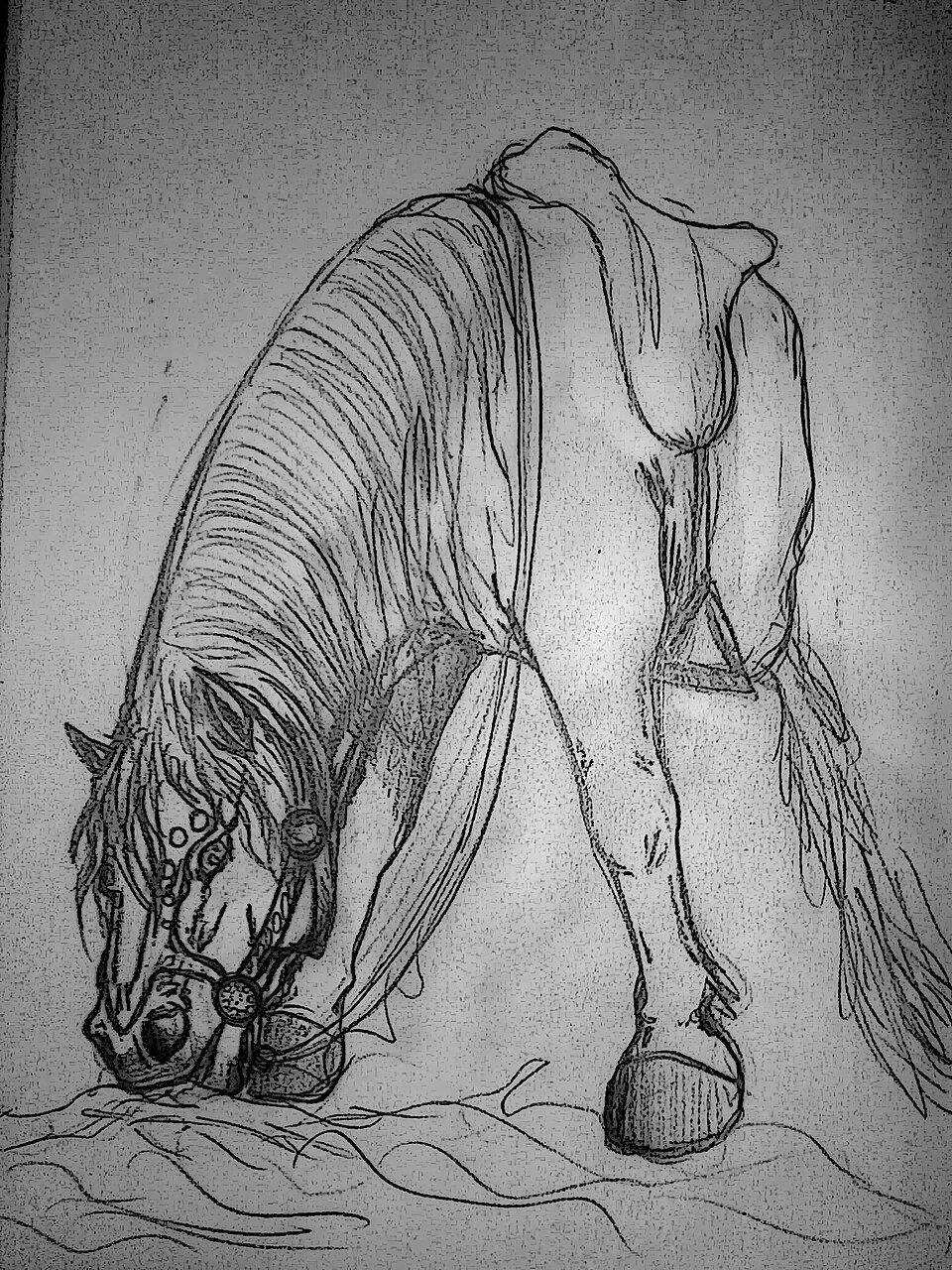
In the folklore of Franche-Comté, France, and the Swiss Jura Mountains, the Cheval Gauvin ("Gauvin horse") appears as a malevolent, legendary equine entity. It is distinguished by its sinister predilection for liminal and somber geography, reportedly haunting watercourses, forests, and cemeteries. In the prevailing narrative tradition, the horse attempts to murder those who mount it, typically by drowning them or precipitating them into an abyss.
Swiss variations of the legend expand this predatory behavior, describing the beast galloping through villages to abduct young women. Functionally, the Cheval Gauvin operates as a harbinger of death and a nursery bogeyman utilized to frighten children, potentially classified within folklore as a theriomorphic transformation of a goblin or hobgoblin, placing it among a broader taxonomy of legendary Jura horses.
The legend was first formally collected and published by Désiré Monnier in 1854, based on oral traditions from Chamblay. The narrative distribution is extensive, with identical motifs recorded in French locales such as Montbarrey, Joux, and Dole, as well as throughout the Swiss Canton of Jura and the Bernese Jura. Specific localized iterations attach the beast to historical figures, identifying it as the mount of the medieval lord Amauri III de Joux.
Furthermore, a persistent account concerning a woman’s encounter with the creature in the Chamblay cemetery has been a subject of commentary and retelling since the nineteenth century.
Linguistic analysis of the creature's name reveals uncertainty regarding its ultimate etymology, though it notably shares its cognomen with the Arthurian knight Gauvin (Gawain). While "Gauvin" is the predominant standard form, variations such as "Gauvain" appear occasionally. Regional dialectal attestations include tchevâ Gâvïn in the archives of Franche-Comté popular traditions and chevau Gauvin in Jura patois, though the precise origin of the nomenclature remains obscure.