Cactus cat
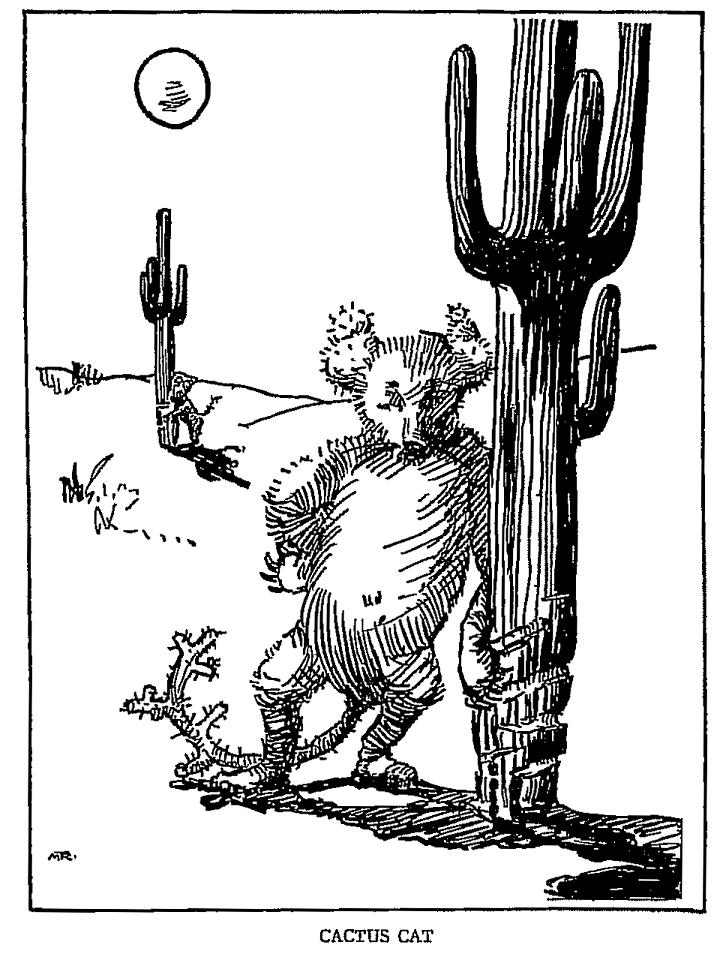
The Cactus Cat was once regarded as a common creature of the American Southwest, particularly within Pueblo and Navajo country. It was frequently reported in the cactus districts between Prescott and Tucson, Arizona, and was occasionally said to occur in northern Mexico. Today it is considered virtually extinct, surviving only in the recollections of early settlers and herders.
The animal was described as catlike in form, but with distinctive thorn-covered hair. These spines were especially long and rigid on the ears and tail. The tail itself branched in cactus-like fashion, its extensions lined with the same bristling spines.
Another notable feature was found in the forelimbs: the lower portions of the radial bones extended into two sharp, blade-like structures. These were used to slash the bases of giant cacti in a practiced manner. The creature would travel a circular route—described in folklore as precisely 80 chains in length—making incisions at regular intervals.
By the time it completed its circuit, the sap from the first cacti had fermented into a sweet alcoholic beverage similar to pulque, which the Cactus Cat consumed on its second pass. After drinking heavily, the animal was said to stagger into the desert, producing rasping sounds by scraping its bony forelegs together while howling in apparent intoxication.
In earlier times, thirsty travelers in Mexico were said to follow the Cactus Cat’s trail and drink from the slashed cacti before the animal’s return. This practice, according to folklore, contributed to the decline of the species. Legends also recount violent encounters in which the Cactus Cat discovered such intruders and killed them with blows from its spiny tail. Victims were reportedly found with red welts and blisters, which onlookers attributed to prickly heat, though old-timers insisted the marks revealed the work of the Cactus Cat.