Brunswick Lion
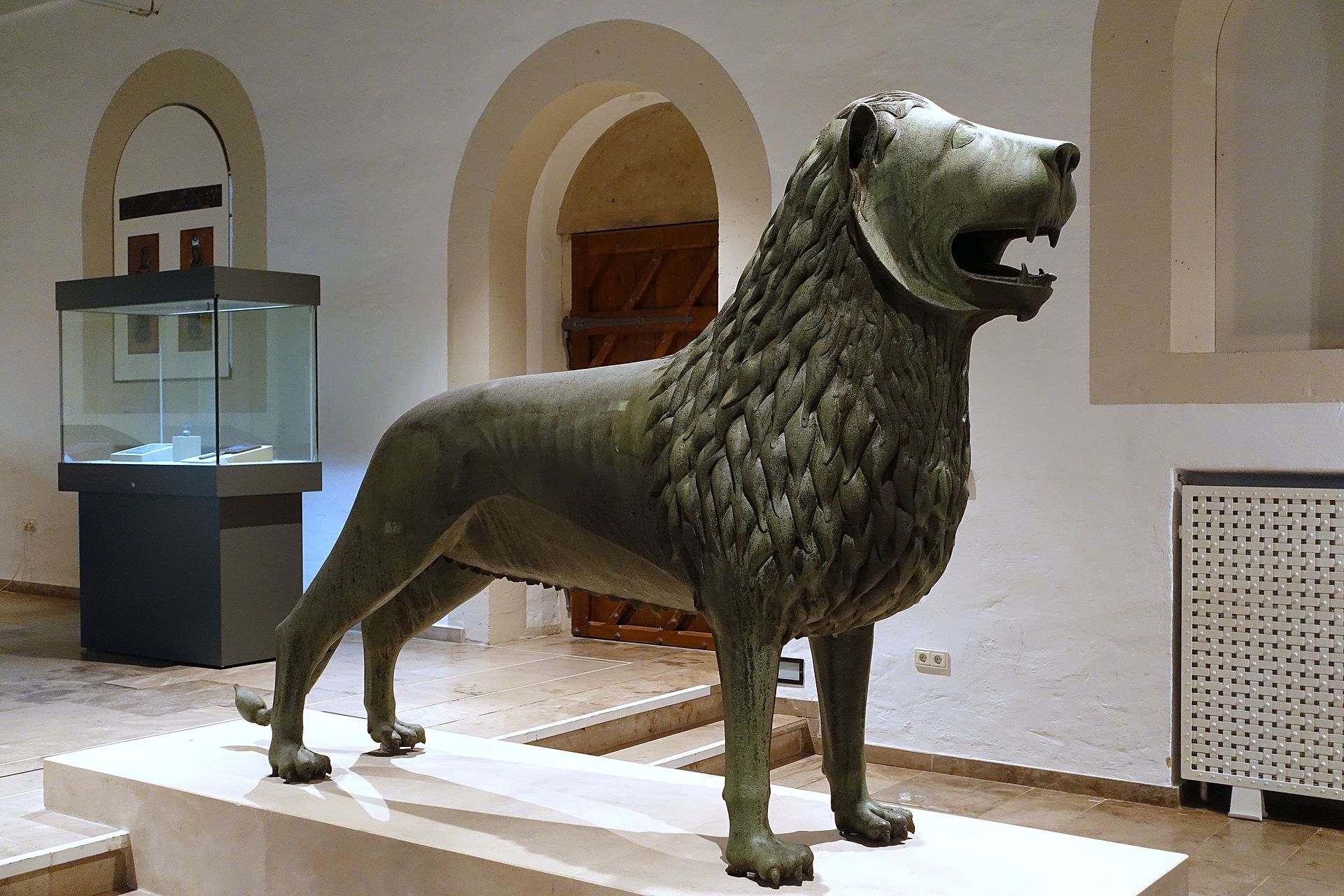
The Brunswick Lion (German: Braunschweiger Löwe) is a celebrated medieval sculpture cast in bronze between 1164 and 1176, ranking as the best-known landmark and most iconic symbol of the German city of Brunswick (Braunschweig). This monumental work represents one of the most important examples of Romanesque metalwork sculpture in Germany and stands as a powerful symbol of ducal authority and civic identity that has endured for over eight centuries. The Brunswick Lion was originally positioned prominently on the Burgplatz square directly in front of the Brunswick Cathedral (Braunschweiger Dom), where it served as both a political statement of ducal power and a focal point of the city's ceremonial and civic space.
The monument remained at this location for more than eight hundred years until concerns about pollution damage and weathering of the irreplaceable medieval bronze prompted its removal. In 1980, the original sculpture was carefully moved indoors to Dankwarderode Castle, where it could be preserved under controlled conditions and protected from further environmental degradation. The original location on the Burgplatz was subsequently occupied by a carefully crafted replica that allows the Brunswick Lion to continue performing its symbolic function as the city's emblematic guardian while the authentic medieval work is safeguarded for future generations.
Within Brunswick, the monument is colloquially and affectionately known as the "Castle Lion" (Burglöwe), reflecting its association with the ducal castle and its role as a symbol of sovereign authority. Shortly after the death of Henry the Lion (Heinrich der Löwe) in 1195—the powerful Duke of Saxony and Bavaria who commissioned the original bronze lion as a symbol of his authority—the duke became the central figure of a popular folktale known as the Heinrichssage (the Henry Saga or Legend of Henry). This legend, which blended historical elements with pure fiction and allegorical meaning, circulated widely in oral tradition before being recorded in written form, and it proved so enduring and popular that it was later adapted into various literary and artistic works, including the opera Enrico Leone composed by the Italian Baroque composer Agostino Steffani in the late seventeenth century, demonstrating the legend's appeal beyond German-speaking regions.
The Heinrichssage presents a fictional and highly romanticized account of Henry the Lion's pilgrimage to the Holy Land—a journey that the historical Henry actually undertook in 1172-1173, providing a kernel of historical truth around which the legend elaborated fantastical embellishments. One of the most popular and frequently retold episodes within this legend specifically concerns the origin of the Brunswick Lion monument and transforms the sculpture from a political symbol into a memorial of extraordinary loyalty and devotion. According to this beloved legend, while Henry was traveling through the exotic and dangerous landscapes of the Holy Land during his pilgrimage, he witnessed a dramatic battle between a lion and a dragon—two creatures laden with symbolic meaning in medieval Christian culture, with the lion often representing courage, nobility, and Christ himself, while the dragon embodied evil, paganism, and Satan.
Moved by the lion's courage and recognizing a kindred noble spirit, Henry courageously intervened in the combat, joining forces with the lion against their common draconic enemy. Together, the duke and the lion fought valiantly and succeeded in slaying the dragon, forging a bond through shared battle that transcended the normal boundaries between human and beast. The grateful and faithful lion, having found a worthy companion and master in Henry, then accompanied the duke on his long journey back from the Holy Land to Brunswick, serving as his devoted companion, protector, and symbol of the extraordinary bond that courage and nobility could create between man and animal.
The lion remained by Henry's side through all subsequent adventures and trials, demonstrating unwavering loyalty that became proverbial. When Henry the Lion eventually died and was laid to rest, the legend recounts that the faithful lion, grief-stricken at the loss of his beloved master and companion, demonstrated a devotion that surpassed even human constancy. The lion refused all food offered to it, pining away with sorrow and remaining vigil at Henry's grave site.
Unable to endure existence without his master, the lion died of grief while lying upon or beside Henry's tomb, offering a final testament to the depth of loyalty and love that could exist between noble souls regardless of species. The people of Brunswick, deeply moved by this extraordinary tale of devotion, fidelity, and the transcendent bond between the great duke and his lion companion, resolved to commemorate this remarkable relationship and honor the faithful creature's memory. They erected the magnificent bronze statue that still stands today, creating a permanent memorial not to human achievement alone but to the lion's exemplary loyalty—a virtue that medieval culture prized above almost all others and that the story presented in its purest and most moving form through the image of an animal whose love for its master proved literally stronger than the survival instinct itself.
This legend, while historically false—the actual Brunswick Lion was commissioned by Henry during his lifetime as a symbol of ducal authority and was not erected after his death as a memorial to a legendary companion animal—nevertheless reveals much about medieval values, the cultural function of monumental sculpture, and the human desire to infuse civic symbols with emotional narratives that connect political power to deeper virtues like loyalty, courage, and transcendent bonds of affection. The Heinrichssage transformed a cold political statement of territorial dominion into a warm story of friendship and fidelity that ordinary citizens could emotionally invest in, allowing the Brunswick Lion to function simultaneously as a symbol of ducal authority and as a beloved figure in local folklore whose presence in the city center reminded viewers not merely of power but of the highest ideals of loyalty and devotion that power should ideally serve.