Bhumibol Adulyadej
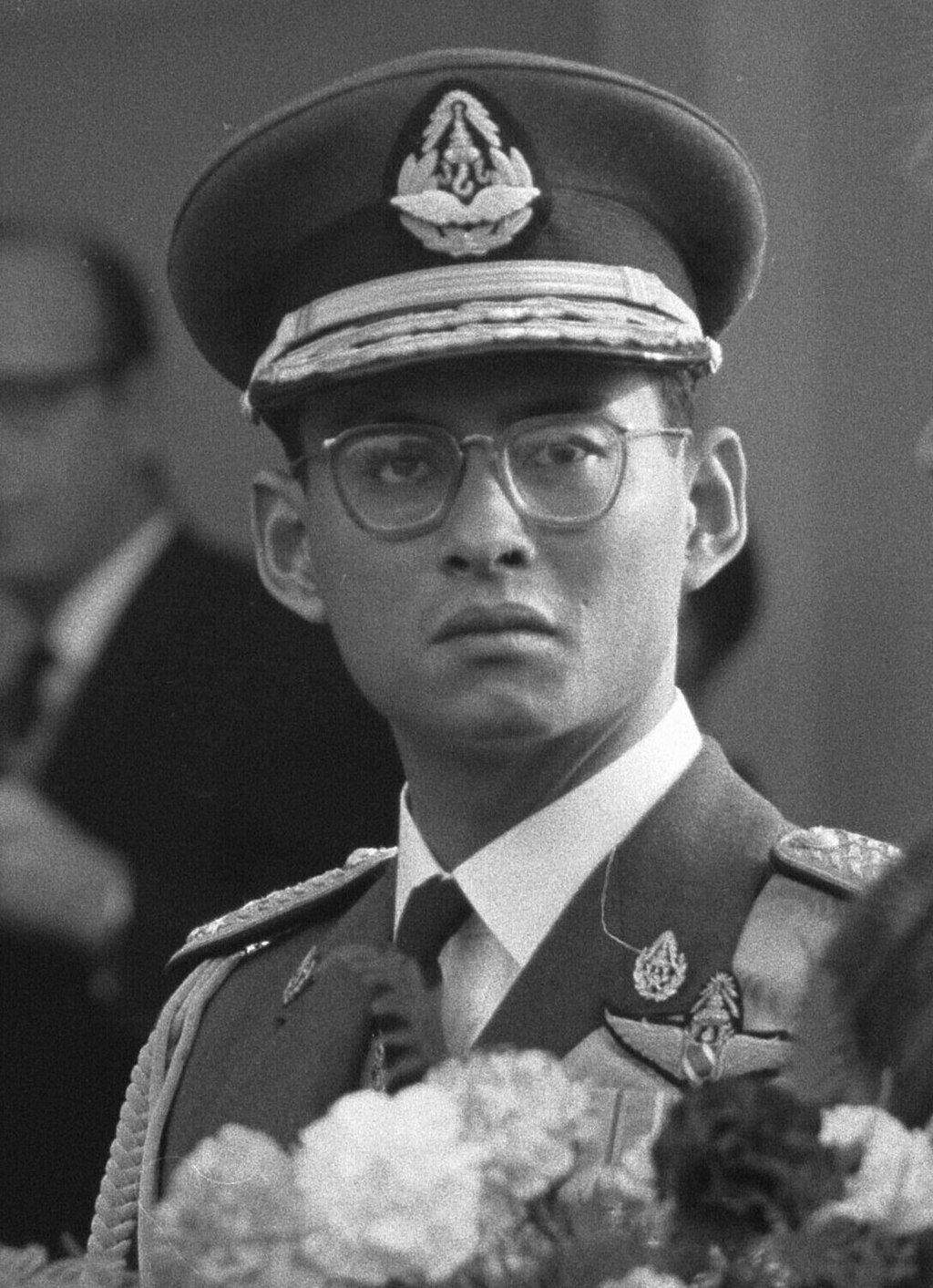
Bhumibol Adulyadej (December 5, 1927 – October 13, 2016), titled Rama IX, was King of Thailand from June 9, 1946, until his death in 2016. His reign of seventy years and 126 days is the longest of any Thai monarch in history, the longest on record of any independent Asian sovereign, and the third-longest verified reign of any monarch in world history. His extraordinarily long tenure on the throne allowed him to become deeply embedded in Thai political, social, and cultural life, transforming the monarchy from an institution that had been significantly weakened by the 1932 revolution into a revered symbol of national unity and continuity that wielded substantial informal political influence despite Thailand's nominal constitutional framework.
Born in Cambridge, Massachusetts, in the United States, where his father Prince Mahidol was studying medicine at Harvard University, Bhumibol spent his early childhood and formative years in Switzerland, far from Thailand, growing up in the aftermath of the 1932 Siamese revolution that had toppled Thailand's centuries-old absolute monarchy and transformed the country into a constitutional monarchy with severely reduced royal powers. At the time of the 1932 revolution, Thailand was ruled by his uncle, King Prajadhipok (Rama VII), who was forced to accept constitutional limitations on royal authority and eventually abdicated in 1935, leaving the throne to Bhumibol's older brother Ananda Mahidol, who was then a child living in Switzerland and who ruled nominally while remaining abroad for his education. Bhumibol unexpectedly ascended to the throne in June 1946 at age eighteen following the shocking death of his brother King Ananda Mahidol (Rama VIII), who was found shot dead in his bedroom in the Grand Palace under mysterious circumstances that have never been definitively explained and that remain officially unsolved despite investigations, trials, and executions of accused conspirators.
The circumstances of Ananda's death—whether accident, suicide, or assassination—have been the subject of speculation, conspiracy theories, and strict censorship under Thailand's lèse-majesté laws that prohibit any critical discussion of the monarchy. Bhumibol, who had been studying in Switzerland and had no expectation of becoming king, was thrust into the role and spent several more years completing his education before returning to Thailand in 1951 to assume his duties more fully. During the course of his seven-decade reign, Bhumibol presided over Thailand's dramatic transformation from a poor, agrarian, underdeveloped society into a major United States ally during the Cold War and a significant regional economic power.
Thailand served as a crucial American base during the Vietnam War, hosting US military installations and supporting American operations in Indochina, while Bhumibol cultivated close relationships with American officials and positioned Thailand as a bulwark against communism in Southeast Asia. Between 1985 and 1994, Thailand experienced extraordinary economic expansion and was classified by the World Bank as the world's fastest-growing economy, achieving annual GDP growth rates that regularly exceeded eight percent and sometimes reached double digits. During the early 1990s, Thailand's sustained rapid growth, increasing industrialization, expanding exports, and rising living standards led many international journalists, economists, and analysts to predict confidently that Thailand would become the next "Asian Tiger"—joining the ranks of South Korea, Taiwan, Hong Kong, and Singapore as newly industrialized economies that had successfully transitioned from poverty to prosperity through export-oriented growth strategies.
During this period of rapid economic expansion, Thailand also experienced significant social transformation including the emergence of a substantial urban middle class concentrated in Bangkok and other cities, increasing educational opportunities, greater exposure to global media and culture, and rising mass political participation in electoral politics as more Thais became politically conscious, organized, and assertive in demanding political voice and accountability from government. However, this trajectory of rapid economic growth and gradual democratization came to a sudden and traumatic end with the 1997 Asian financial crisis, which began in Thailand when the collapse of the Thai baht's peg to the US dollar triggered a cascading regional economic meltdown. The crisis devastated Thailand's economy, wiped out middle-class savings, led to mass unemployment, and shattered the confidence and optimism that had characterized the boom years.
The economic crisis and its aftermath triggered prolonged political instability that characterized Thai politics throughout the 2000s and 2010s, including the rise of controversial populist Prime Minister Thaksin Shinawatra, his overthrow in a 2006 coup, bitter conflicts between his supporters (the "Red Shirts") and opponents (the "Yellow Shirts"), street protests and violence, and cycles of elections followed by judicial or military interventions that prevented stable democratic governance. Bhumibol's reign was characterized by repeated cycles of gradual democratization and political liberalization punctuated by frequent military coups d'état—interventions in which the military seized power, suspended the constitution, and overthrew elected civilian governments. The pattern of coup followed by transitional period followed by new constitution and elections followed eventually by another coup repeated approximately every decade, with major coups occurring in 1947, 1958, 1976, 1991, 2006, and 2014.
The role of King Bhumibol in these coups remains controversial and contested: officially, the king operated strictly within constitutional bounds and merely endorsed the fait accompli after the military had seized power; however, critics and some scholars argue that Bhumibol wielded substantial informal political influence, that his approval or disapproval could make or break governments, that military leaders sought and received royal blessing before staging coups, and that the king's interventions consistently favored conservative, royalist, and military-aligned factions over populist or reformist movements that threatened establishment interests. The 2014 coup, the last military intervention during Bhumibol's reign, ended twenty years of competitive electoral politics and civilian government dominated by Thaksin Shinawatra and his political successors, and saw the return of overt military dictatorship and the reassertion of the Thai military's dominant influence within Thai politics under General Prayut Chan-o-cha, who became prime minister and remains in power. Forbes magazine estimated that Bhumibol's personal fortune—including extensive property holdings, corporate investments, and other assets managed by the Crown Property Bureau, an opaque quasi-governmental body that controls vast wealth on behalf of the monarchy but whose finances are secret and legally protected from public scrutiny—totaled approximately thirty billion US dollars in 2010.
This enormous wealth made Bhumibol one of the world's wealthiest monarchs and individuals, and Forbes listed him at the top of its annual ranking of the "world's richest royals" consistently from 2008 through 2013. The Crown Property Bureau's assets include prime Bangkok real estate, shares in major Thai corporations, and other investments whose total value in 2014 was again estimated at thirty billion dollars. However, the legal structure of these assets is complex and contested: officially, they are owned by "the crown as an institution" rather than by the monarch personally as private property, though the practical distinction remains unclear, particularly regarding control, use, and succession of these assets.
After a prolonged period of deteriorating health that became increasingly serious during his final years and left him hospitalized at Siriraj Hospital in Bangkok for extended periods with various ailments including infections, respiratory problems, and other complications related to advanced age, Bhumibol died on October 13, 2016, at age eighty-eight. His death prompted an extraordinary outpouring of public grief throughout Thailand, with millions of Thais wearing black clothing for months in mourning and the country entering an official mourning period. Bhumibol was extraordinarily highly revered by the Thai people, with surveys consistently showing that overwhelming majorities viewed him with profound respect, gratitude, and affection.
Many Thais regarded him not merely as a political figure but as a semi-sacred person who was close to divine, a perception cultivated through decades of palace propaganda, media censorship, mandatory displays of royal reverence, and the king's carefully constructed public image as a hardworking, development-focused monarch who traveled to remote rural areas, launched agricultural development projects, and demonstrated genuine concern for ordinary Thais' welfare. However, this near-universal public reverence existed within a context of severe legal and social constraints on any criticism of the monarchy: Thailand's strict lèse-majesté laws (Article 112 of the Criminal Code) make it a criminal offense punishable by up to fifteen years in prison per count to "defame, insult, or threaten" the king, queen, crown prince, or regent, and these laws have been aggressively enforced to suppress any critical analysis or discussion of the monarchy's role in Thai politics, society, or economics. Notable political activists, academics, journalists, and ordinary Thai citizens who criticized King Bhumibol, questioned the monarchy's political role, or even simply discussed historical facts deemed unflattering to the royal institution were frequently forced into exile to avoid prosecution, or suffered repeated imprisonments under harsh conditions, creating a climate of fear and self-censorship that made honest assessment of Bhumibol's reign virtually impossible within Thailand.
Bhumibol's elaborate royal cremation ceremony was held in October 2017 at a specially constructed royal crematorium at Sanam Luang, the royal ceremonial ground in Bangkok, following traditional Thai royal funeral rites that had been meticulously planned for years and that cost hundreds of millions of dollars. The ceremony, which lasted several days and involved elaborate processions, religious rituals, and the participation of hundreds of thousands of mourners, reflected the extraordinary reverence in which Bhumibol was held and the Thai monarchy's central symbolic importance in Thai national identity. His son Vajiralongkorn, who had a far more controversial reputation than his father, succeeded him as King Rama X of Thailand, though Vajiralongkorn delayed his formal coronation until 2019, ruling initially as king without having been crowned in the traditional elaborate coronation ceremonies that formalize the monarch's sacred status in Thai Buddhist cosmology.