Barong
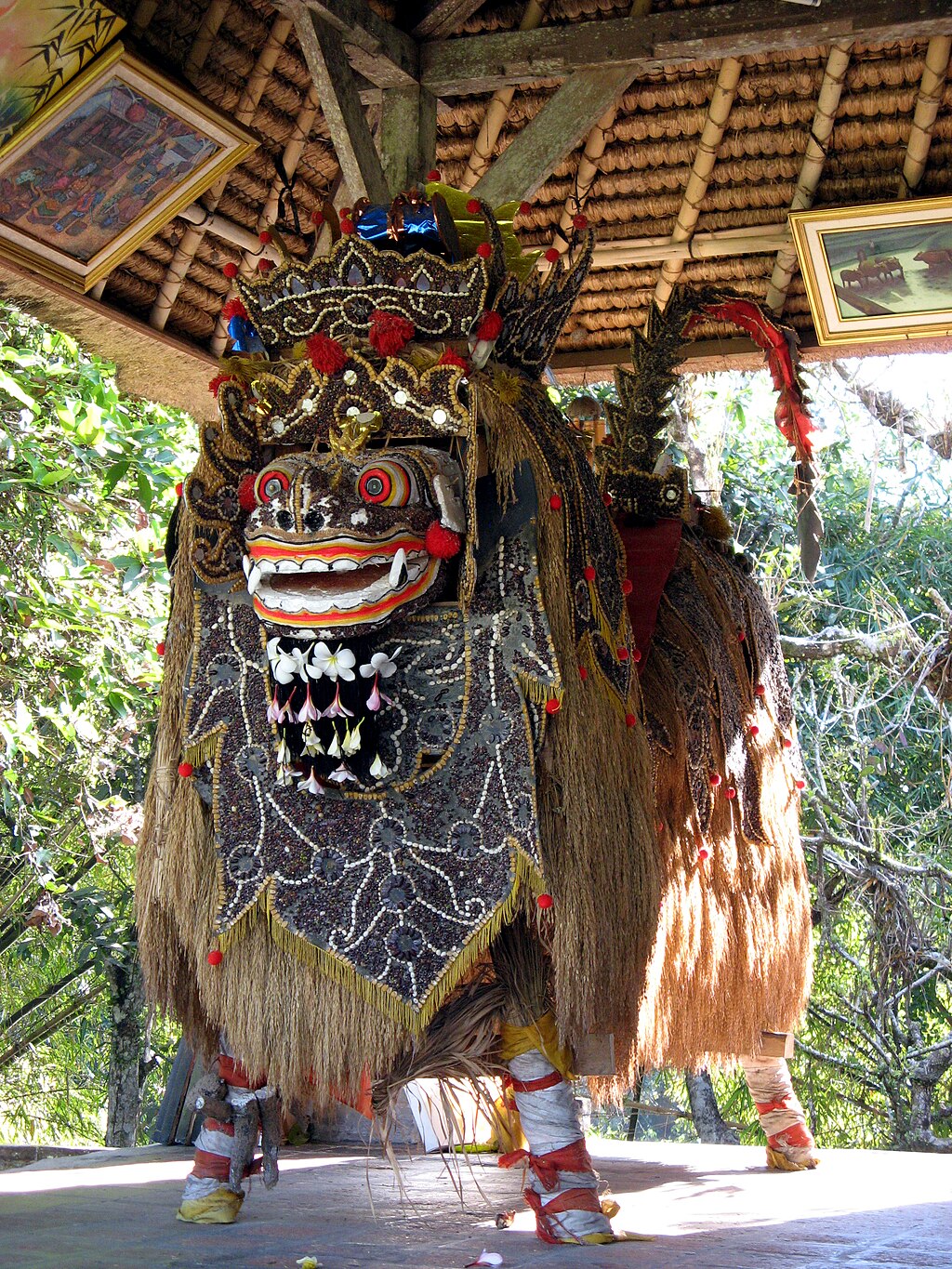
Barong (Balinese script: ᬩᬭᭀᬂ, literally meaning "bear," Balinese pronunciation: [baroŋ]) is a powerful panther-like or lion-like creature and central character in the rich mythology and ritual traditions of Bali, Indonesia. Despite the literal meaning of his name, Barong's appearance more closely resembles a fantastical hybrid combining leonine and other features rather than an actual bear, reflecting the complex symbolic nature of Balinese sacred beings whose names do not always correspond literally to their depicted forms. Within Balinese cosmology and spiritual belief, Barong holds the exalted position of king of the spirits, serving as the supreme leader of the hosts of benevolent supernatural beings who protect villages, temples, and individuals from malevolent forces.
He functions as the great protector and guardian spirit, embodying positive cosmic forces including prosperity, health, fertility, and the protective power that maintains cosmic balance and communal harmony. Barong stands in eternal opposition to Rangda, his fearsome adversary who is characterized as the demon queen, the embodiment of black magic and destructive forces, and the mother of all spirit guarders (leyak) in Balinese mythological traditions—witches and sorcerers who can transform into various monstrous forms and who threaten human welfare through their malicious supernatural powers. The mythological conflict between Barong and Rangda represents one of the fundamental dualities in Balinese Hindu-Buddhist thought, embodying the cosmic struggle between order and chaos, protection and destruction, life-sustaining forces and death-bringing powers.
This eternal battle is dramatically enacted in the famous Barong dance (Barong Ket), one of Bali's most important and spectacular ritual performances, which serves simultaneously as entertainment, religious ceremony, and living mythology. The dance portrays the confrontation between Barong, accompanied by his followers and supporters including human warriors and monkeys, against Rangda and her army of witches and demons, with the performance featuring elaborate masks, costumes, music, trance states, and choreographed combat that brings the ancient story to vivid life. Critically, the battle between Barong and Rangda typically ends not in the decisive victory of one side over the other, but rather in a temporary stalemate or balance, reflecting the profound Balinese philosophical understanding that good and evil are not destined for final resolution with evil's permanent defeat, but instead exist in perpetual dynamic tension.
This represents the eternal, ongoing nature of the cosmic battle between opposing forces that must be continuously negotiated and balanced rather than definitively won. The performance and the mythology it enacts thus serve to reinforce fundamental Balinese concepts about the nature of reality, the necessity of maintaining ritual balance through proper ceremonies and offerings, and the understanding that both creative and destructive forces are essential and permanent features of the cosmos that must be acknowledged, respected, and kept in equilibrium through human ritual action and devotion rather than eliminated through victory of one principle over another.