Balius and Xanthus
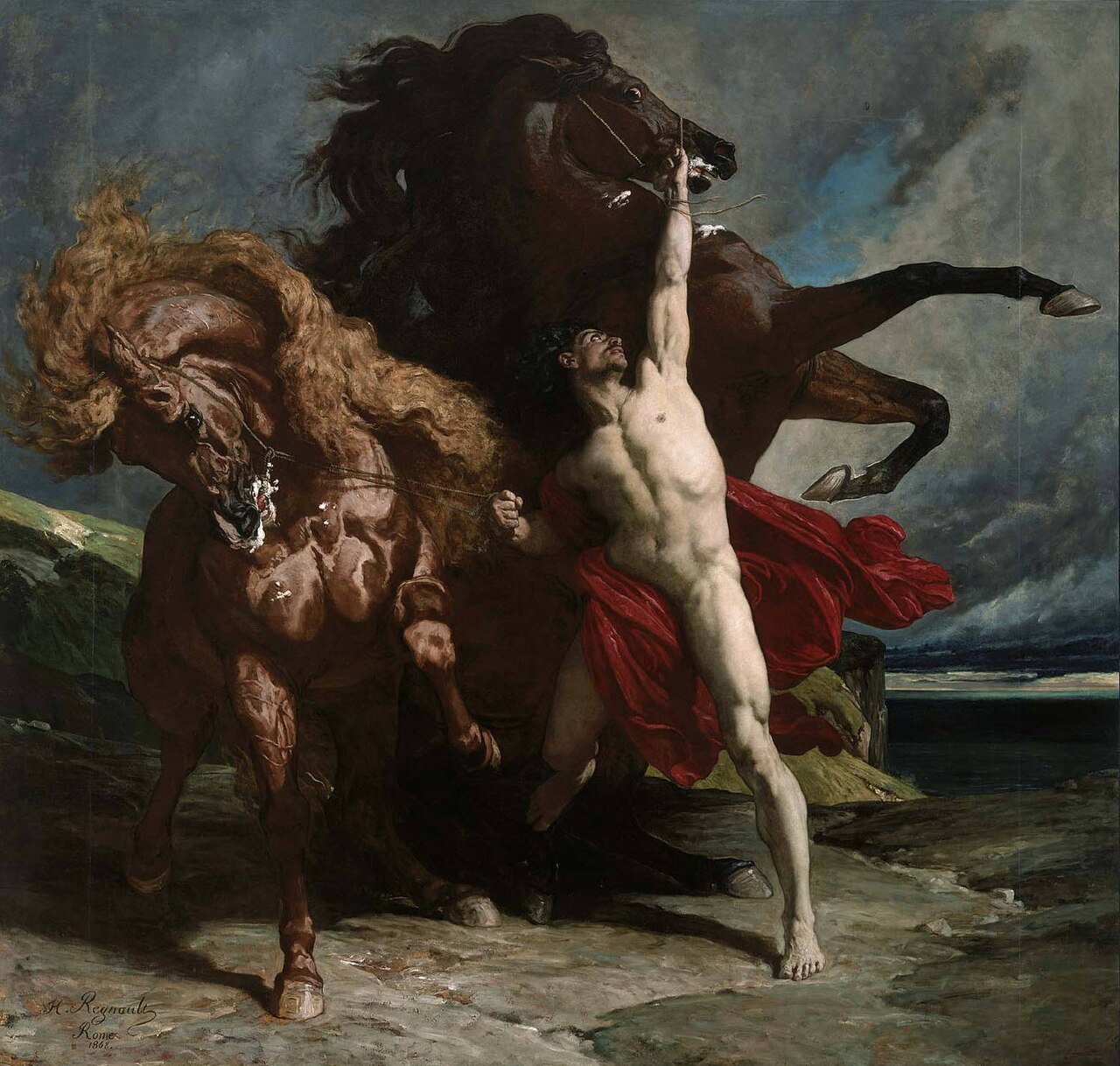
In Greek mythology, Balius (Ancient Greek: Βάλιος, likely "dappled") and Xanthus (Ξάνθος, "blonde") figure prominently as the immortal horses of Achilles, creatures of divine lineage and supernatural capability. The standard genealogy identifies them as the offspring of the harpy Podarge and the West Wind, Zephyrus. However, variant traditions present alternative lineages, with some accounts suggesting Poseidon fathered Xanthus and a sibling, Cyllarus, by an unnamed mother.
The prophetic nature of Xanthus draws significant parallels to Arion, another divine steed who, in Statius's Thebaid, is depicted as saving Adrastus during the war of the Seven against Thebes through similar prescient abilities.
The provenance of these animals is traced to the wedding of King Peleus of Phthia and the Nereid Thetis, where Poseidon bestowed them upon Peleus as a divine gift. These mounts were subsequently inherited by Peleus's son, Achilles, who deployed them to draw his chariot during the Trojan War. The Homeric account in the Iliad (Book 16) notes the inclusion of a third, mortal trace horse named Pedasos—etymologized variously as "Jumper" or "Captive"—whom Achilles had seized during the sack of Eetion.
Although mortal, Pedasos possessed the speed to keep pace with his immortal yoke-mates until he was slain by the Lycian prince Sarpedon, whose spear had been intended for Patroclus. The text emphasizes a profound bond between the immortal horses and Patroclus, who served as their primary groom; upon his death, the Iliad depicts Balius and Xanthus standing immobilized and weeping on the battlefield. This connection is further underscored by the charioteer Automedon, who suggests that only the fallen Patroclus possessed the requisite skill to fully master the team, a vacuum of authority that briefly necessitates the intervention of the Myrmidon leader Alcimedon.
The narrative significance of the horses culminates in Book 19 of the Iliad, following Achilles’ rebuke of the pair for leaving Patroclus dead on the field. In a moment of divine intervention, Hera grants Xanthus the power of human speech. The horse vindicates the pair by attributing Patroclus's death to the agency of Apollo and prophesies the imminent demise of Achilles himself at the hands of a god and a mortal.
Immediately following this violation of the natural order, the Erinyes (Furies) struck the horse dumb. Beyond the Homeric cycle, fragmentary evidence from lyric poets such as Alcman and Stesichorus indicates a divergent tradition in which Xanthus and Cyllarus are sons of Poseidon given to Hera. In this version, she gifts them to the Dioscuri, and Xanthus retains his capacity for speech, conversing with Castor in battle.