Attila
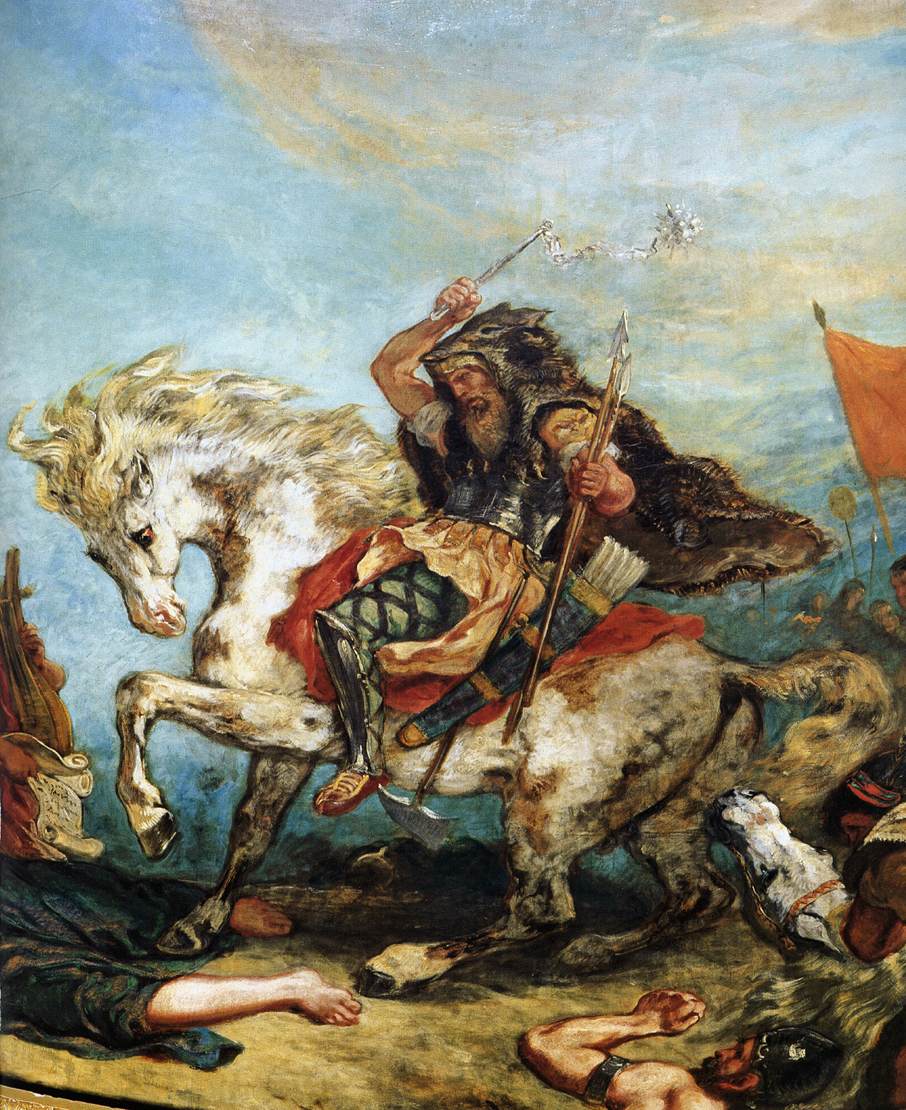
Attila (c. 406–453), commonly known as Attila the Hun, ruled the Huns from 434 until his death in early 453. He commanded a vast empire that included not only the Huns but also the Ostrogoths, Alans, Gepids, and other peoples across Central and Eastern Europe.
Attila and his older brother Bleda inherited power from their uncle Rugila in 435, sharing the throne until Bleda's death in 445. Throughout his reign, Attila became one of the most dreaded adversaries of both the Western and Eastern Roman Empires. He launched two campaigns across the Danube, ravaging the Balkans, though Constantinople remained beyond his grasp.
His successful invasion of the Eastern Roman (Byzantine) Empire in 441 encouraged him to turn his attention westward. In 451, he attempted to conquer Roman Gaul (present-day France), crossing the Rhine and advancing as far as Aurelianum (Orléans) before being halted at the Battle of the Catalaunian Plains. Following this setback, Attila turned to Italy, devastating its northern territories, but he failed to capture Rome itself.
While planning additional campaigns against the Romans, he died in 453. His death triggered the empire's rapid disintegration when his trusted adviser, Ardaric of the Gepids, spearheaded a Germanic uprising against Hunnic rule. Despite his empire's collapse, Attila endured as a legendary figure in Germanic heroic tradition.