Arthur Wellesley
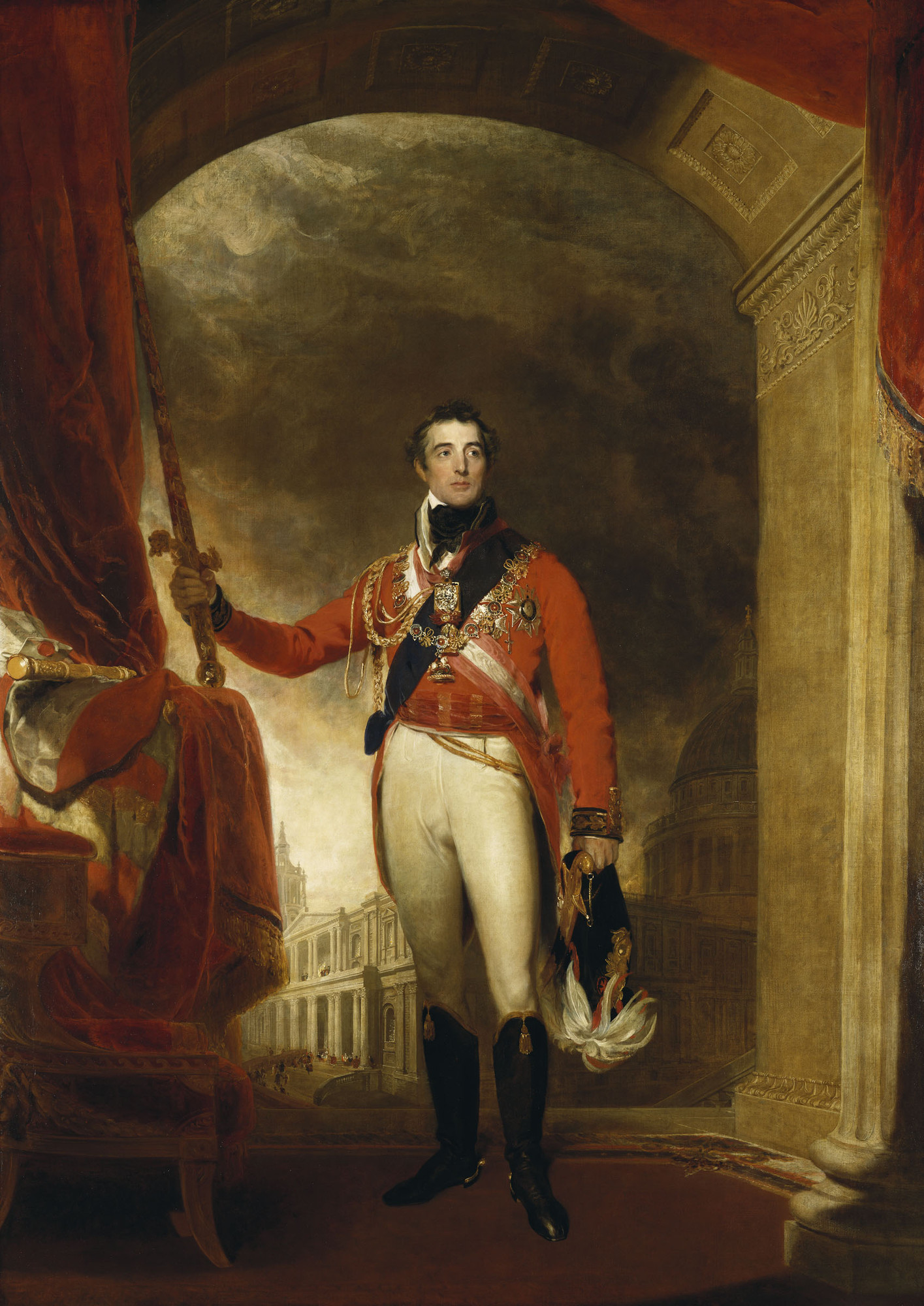
Field Marshal Arthur Wellesley, 1st Duke of Wellington, originally born Wesley on May 1, 1769, stood among Britain's most influential military and political leaders during the early 1800s. He held the office of Prime Minister twice and played a crucial role in ending both the Anglo-Mysore conflicts through Tipu Sultan's defeat in 1799 and the Napoleonic Wars, culminating in Napoleon's final defeat at Waterloo in 1815. He died on September 14, 1852.
Born into Dublin's Protestant Ascendancy in the Kingdom of Ireland, Wellesley began his military career in 1787 as an ensign. He served as aide-de-camp to two consecutive Irish lords lieutenant while simultaneously holding a seat in the Irish House of Commons. By 1796, having attained the rank of colonel, he participated in the Flanders campaign before his deployment to India.
There he distinguished himself in the Fourth Anglo-Mysore War, achieving victory at Seringapatam in 1799. Subsequently appointed governor of both Seringapatam and Mysore, he secured a major triumph against the Maratha Confederacy at Assaye in 1803 as a major-general. Wellesley's reputation flourished during the Peninsular War, where his leadership earned him promotion to field marshal following his 1813 victory over French forces at Vitoria.
After Napoleon's initial exile in 1814, he served as Britain's ambassador to France and received the title Duke of Wellington. When Napoleon returned during the Hundred Days of 1815, Wellington led a British-commanded force that, alongside Prussian troops under Field Marshal Gebhard von Blücher, defeated the French emperor at Waterloo. Following his military service, Wellington became a key figure in the Tory party.
His first prime ministerial term lasted from 1828 to 1830, with a brief interim appointment in 1834. During his tenure, he facilitated the passage of the Roman Catholic Relief Act 1829 while standing against the Reform Act 1832. He remains the sole Irishman to have served as British prime minister.
Wellington maintained his influence in the House of Lords until 1846 and held the position of Commander-in-Chief of the Forces until his death in 1852.