Arminius
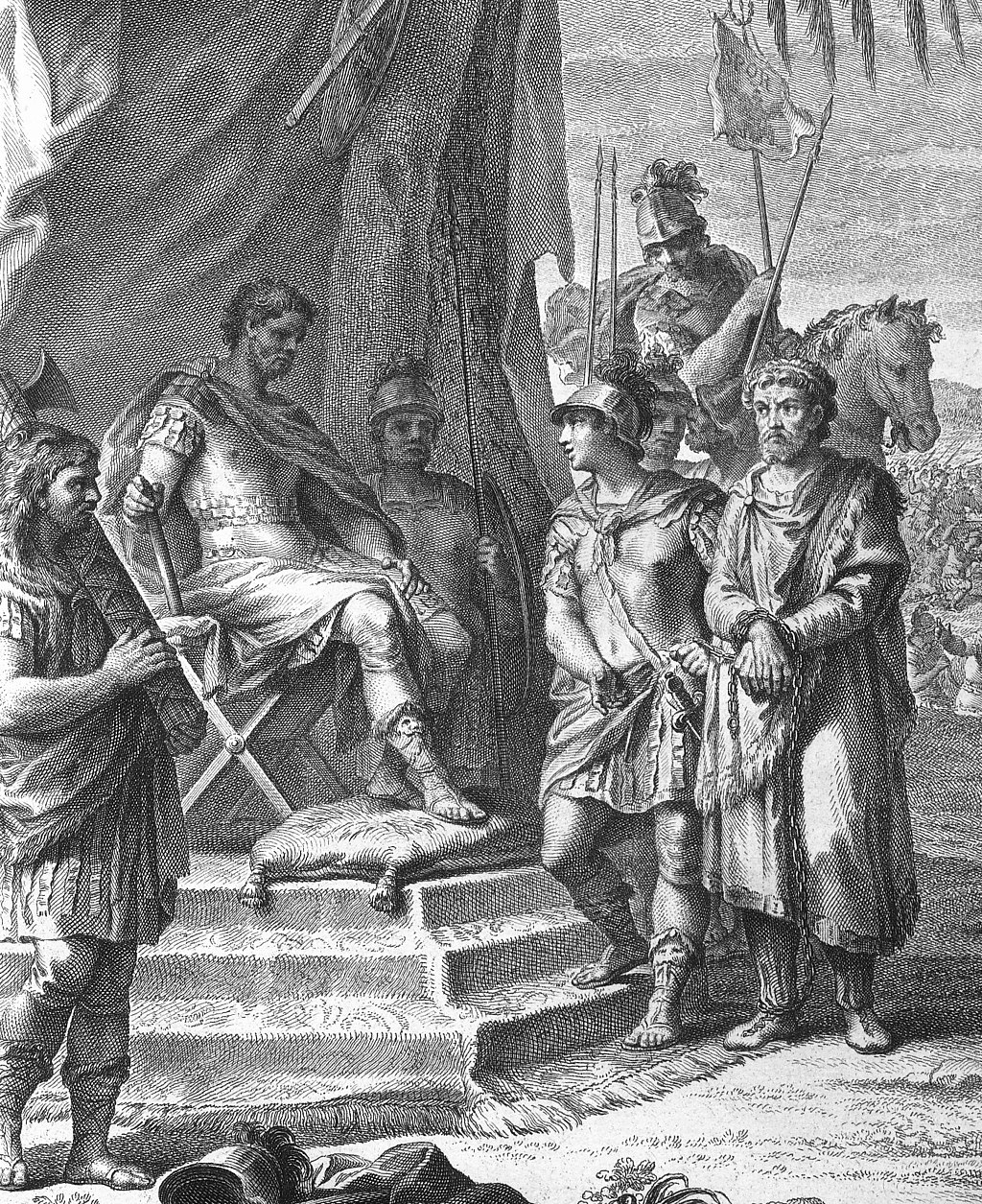
Arminius (18/17 BC–AD 21; known as Hermann in German), was a chieftain of the Germanic Cherusci tribe who achieved lasting fame by commanding an alliance of Germanic tribes at the Battle of the Teutoburg Forest in AD 9, where his forces annihilated three Roman legions under the command of general and governor Publius Quinctilius Varus. His stunning victory at Teutoburg Forest precipitated the Roman Empire's permanent strategic withdrawal from Germania Magna and the abandonment of plans to incorporate Germanic territories east of the Rhine as Roman provinces. Modern historians regard Teutoburg Forest as one of Imperial Rome's most catastrophic military defeats and one of the most decisive battles in history, as it prevented the Romanization of Germanic peoples beyond the Rhine and fundamentally altered the course of European development by establishing the Rhine as the enduring boundary between Roman and Germanic civilizations.
Born a prince of the Cherusci tribe, Arminius belonged to the Roman-friendly faction within his people, as the Cherusci leadership was divided between those favoring cooperation with Rome and those advocating resistance. As part of the pro-Roman policy, the young Arminius was sent to serve in the Roman military, where he learned Latin, received training in Roman military tactics and organization, and was granted Roman citizenship along with equestrian rank (eques)—a significant honor that placed him among Rome's privileged classes. He served with distinction during the Great Illyrian Revolt (AD 6–9), a major uprising in the Balkans that required substantial Roman military effort to suppress, demonstrating his capabilities as a military commander and earning the trust of Roman authorities.
Based on this exemplary service record, he was sent to Germania to assist the local governor Publius Quinctilius Varus in completing the Roman conquest and pacification of the Germanic tribes, a mission that would involve integrating these peoples into the Roman provincial system through taxation, Roman law, and administrative reorganization. While ostensibly serving Rome in this capacity, Arminius secretly orchestrated a massive Germanic revolt against Roman rule, exploiting his position of trust to gather intelligence about Roman military dispositions and intentions while forging a coalition among traditionally fractious Germanic tribes. His intimate knowledge of Roman military tactics, command structures, and operational procedures—gained through years of service in the Roman army—proved decisive in planning an ambush that would exploit Roman vulnerabilities.
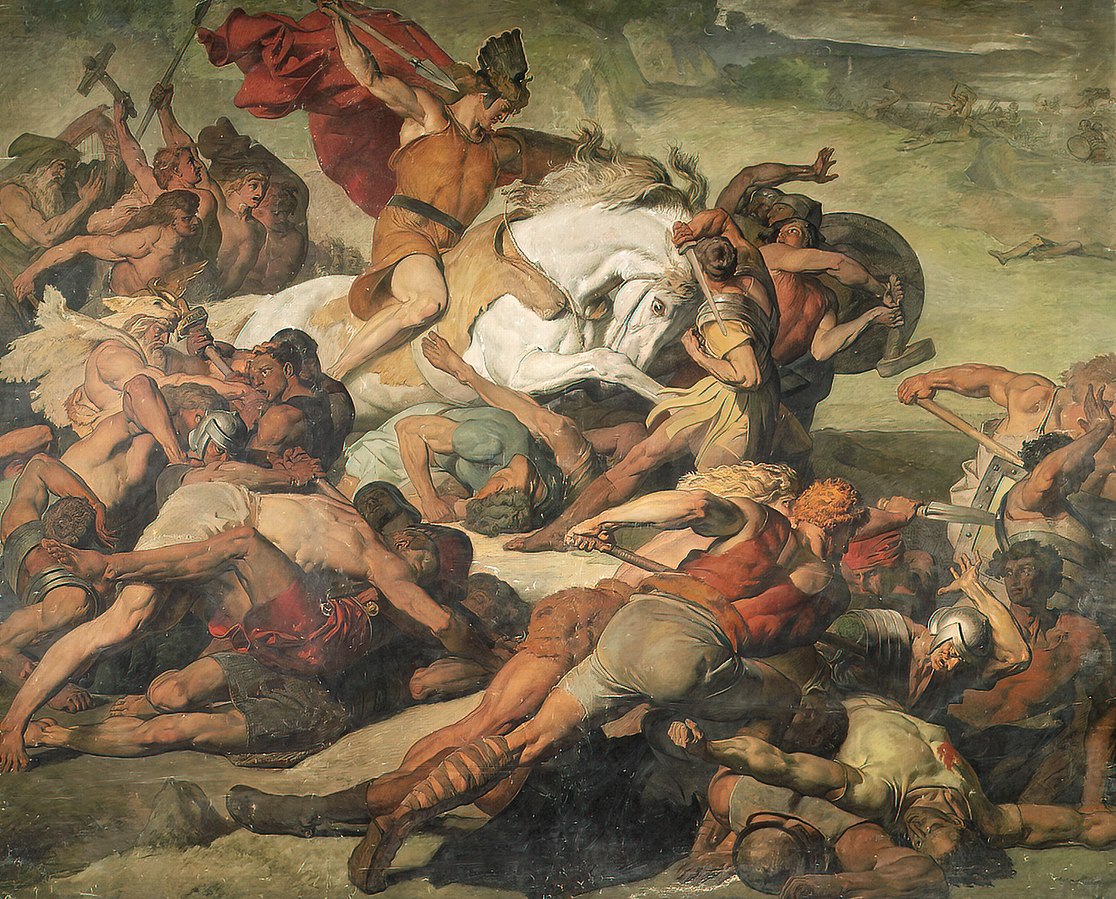
In September AD 9, Arminius lured Varus and his three legions (approximately 15,000–20,000 soldiers plus auxiliary forces and camp followers) into the densely forested and marshy terrain of the Teutoburg Forest under false pretenses. Over several days of fighting in conditions that negated Roman tactical advantages, Germanic warriors systematically destroyed the trapped Roman forces. Varus committed suicide as defeat became inevitable, and the legionary eagles—sacred standards representing the legions' honor—were captured, inflicting profound symbolic and psychological damage alongside the staggering military losses.
In the aftermath of this catastrophic defeat, Rome launched retaliatory invasions aimed at avenging Teutoburg Forest and reasserting Roman dominance. The Roman general Germanicus, nephew of Emperor Tiberius, conducted major campaigns into Germania from AD 14–16, engaging Arminius' forces in several significant battles including Pontes Longi, Idistaviso, and the Angrivarian Wall. Although Germanicus achieved tactical victories and recovered two of the three lost legionary eagles, the campaigns proved enormously expensive and ultimately failed to break Germanic resistance or restore Roman control beyond the Rhine.
Arminius successfully defended Germanic independence despite facing the full weight of Roman military power, demonstrating both his military genius and the difficulty of conquering and holding Germania's difficult terrain against determined resistance. Arminius also defeated Maroboduus, king of the Marcomanni, a rival Germanic ruler who had created a powerful kingdom in Bohemia and represented a competing vision of Germanic political organization. This victory over Maroboduus consolidated Arminius' position as the preeminent Germanic leader and eliminated a potential collaborator with Rome.
However, Arminius' ambitions to establish a unified Germanic kingdom under his rule provoked opposition from Germanic nobles who valued their independence and feared centralized authority. His efforts to become king contradicted traditional Germanic political culture, which favored decentralized leadership and resisted concentrations of power. In AD 21, Arminius was assassinated by members of his own family or tribal rivals who viewed his monarchical ambitions as threatening to Germanic freedom and traditional social structures.
He was approximately thirty-eight years old at his death, having fundamentally altered the relationship between Rome and Germania during his brief but consequential career. Arminius was remembered in Germanic legends and oral traditions for generations after his death, becoming a heroic figure embodying resistance against foreign domination. The Roman historian Tacitus, writing approximately a century after these events, designated Arminius as "the liberator of Germania" and praised him for having fought the Roman Empire to a standstill during the peak of its power—a remarkable tribute from a Roman writer regarding an enemy commander, reflecting genuine respect for Arminius' achievements and acknowledgment of his historical significance.
During the nineteenth-century unification of Germany, Arminius was enthusiastically embraced by German nationalists as a powerful symbol of German unity, martial prowess, and resistance to foreign domination. The Hermannsdenkmal (Hermann Monument), a colossal statue completed in 1875 near the traditional site of the Teutoburg Forest battle, commemorated him as the founder of German national consciousness and celebrated his victory as the beginning of German history. This nationalist appropriation transformed Arminius from a historical figure into a mythological founding father whose resistance to Rome supposedly prefigured German nationalism and justified contemporary German unification under Prussian leadership.
However, following World War II and the catastrophic consequences of German militarism and extreme nationalism, Arminius' significance dramatically diminished in German culture and public consciousness. The rise of anti-militarism, pacifism, and rejection of nationalism in post-war Germany made celebration of military heroes and martial victories problematic, particularly when those heroes had been previously appropriated by nationalist and Nazi ideology. Consequently, the 2,000th anniversary of the Battle of Teutoburg Forest in 2009 received only modest commemoration in Germany, reflecting contemporary German society's ambivalence toward military history and reluctance to celebrate martial achievements that might evoke uncomfortable associations with Germany's militaristic past.
This muted response illustrated how dramatically historical memory and national symbolism can shift based on contemporary political contexts and collective efforts to reckon with difficult historical legacies.