Apis
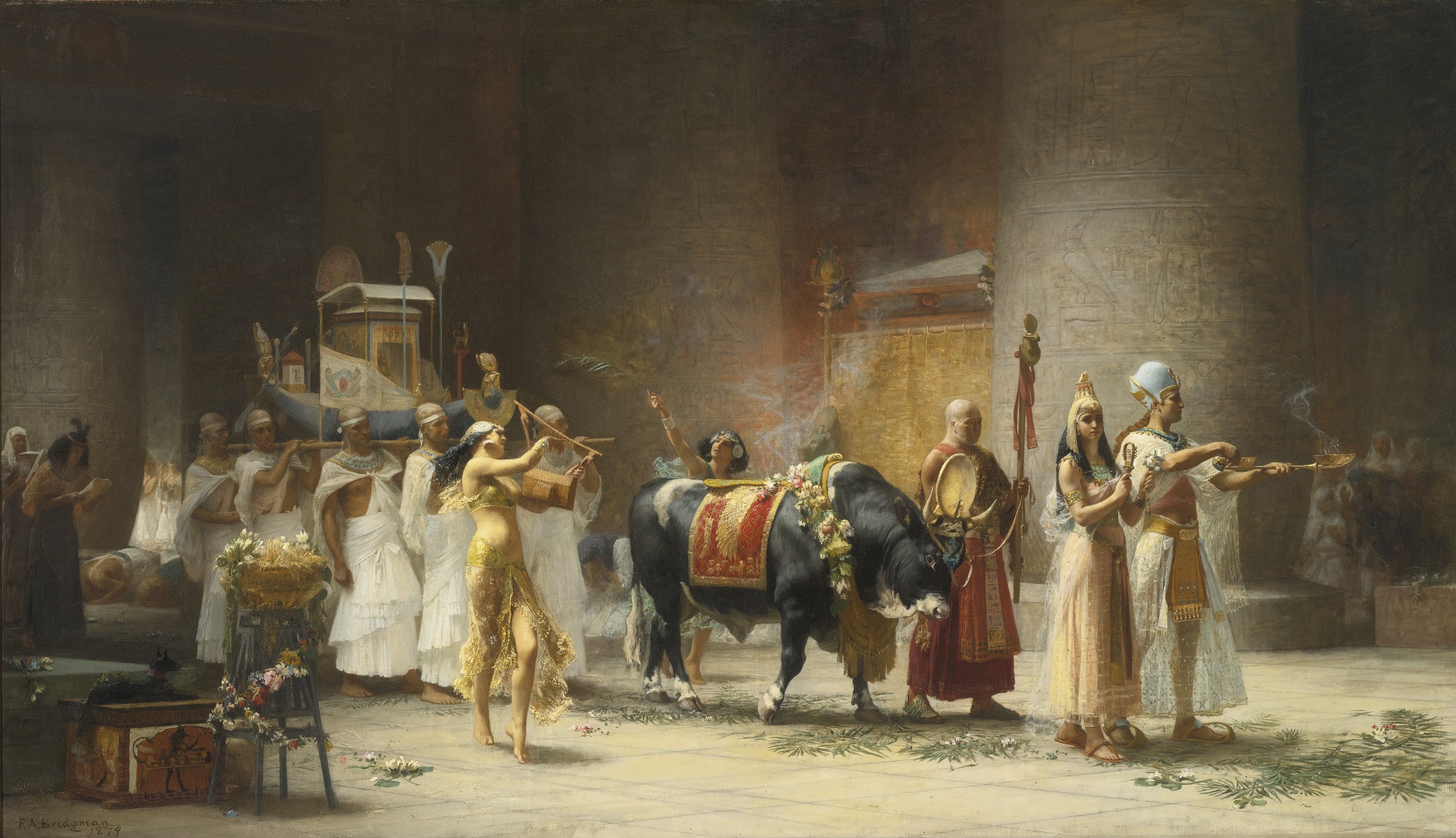
In ancient Egyptian religion, Apis or Hapis, alternatively spelled Hapi-ankh, was a sacred bull or multiple sacred bulls worshiped in the Memphis region and identified as the son of Hathor, a primary deity in the pantheon of ancient Egypt. Initially, he was assigned a significant role in her worship, being sacrificed and reborn. Later, Apis also served as an intermediary between humans and other powerful deities, originally Ptah, later Osiris, then Atum.
The Apis bull was an important sacred animal to the ancient Egyptians. As with the other sacred beasts, Apis' importance increased over the centuries. During colonization of the conquered Egypt, Greek and Roman authors had much to say about Apis, including the markings by which the black calf was recognized, the manner of his conception by a ray from heaven, his house at Memphis with a court for his deportment, the mode of prognostication from his actions, his death, the mourning at his death, his costly burial, and the rejoicings throughout the country when a new Apis was found.
Auguste Mariette's excavation of the Serapeum of Saqqara revealed the tombs of more than sixty animals, ranging from the time of Amenhotep III to the end of the Ptolemaic dynasty. Originally, each animal was buried in a separate tomb with a chapel built above it. From Ramesses II onward, bulls were interred in interconnected underground galleries.