Anzû
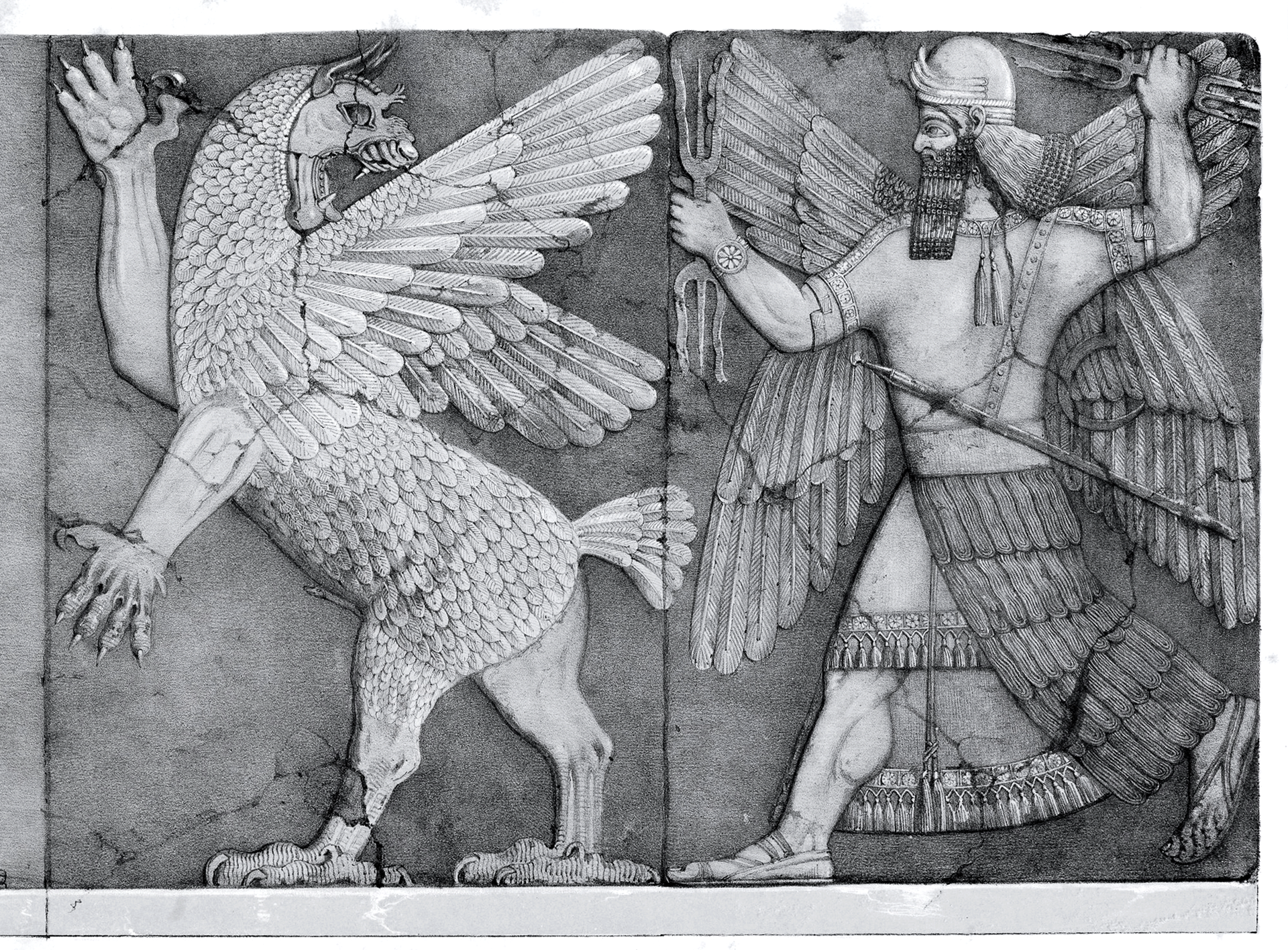
Anzû, also known as dZû or Imdugud (Sumerian: 𒀭𒅎𒂂 dim.dugudmušen), is a storm-bird and demon figure found across several Mesopotamian religions. His origins vary in different traditions: in some accounts he was born from the cosmic freshwater ocean Abzu and the earth goddess Mami, while in others he is described as the son of Siris. In Babylonian myths, Anzû is depicted as a colossal bird, sometimes portrayed as an eagle with the head of a lion, capable of breathing fire and water.
These narratives preserve elements of earlier Sumerian myths, in which he appears as a half-human storm bird who steals the Tablet of Destinies, defying the authority of Enlil and disrupting the divine order that secured agriculture and prosperity for Mesopotamia.
According to Stephanie Dalley in Myths from Mesopotamia, the Epic of Anzû survives in two major forms. The Old Babylonian version of the early second millennium BC names Ningirsu as the hero, while the later Standard Babylonian version, dated to the first millennium BC, is the more widely cited and features Ninurta as the victor. In some variations Marduk, rather than Ninurta, is credited with killing the bird.
Within Sumerian and Akkadian tradition, Anzû embodies the southern wind and thunderclouds. After stealing the Tablet of Destinies from Enlil, he carried it to a mountain refuge, forcing the gods to confront him despite their fear. His role extends beyond this myth: he also appears in Inanna and the Huluppu Tree, included in the preamble to the Sumerian epic Gilgamesh, Enkidu, and the Netherworld, and plays a part in Lugalbanda and the Anzud Bird (also known as The Return of Lugalbanda).