Albert I of Belgium
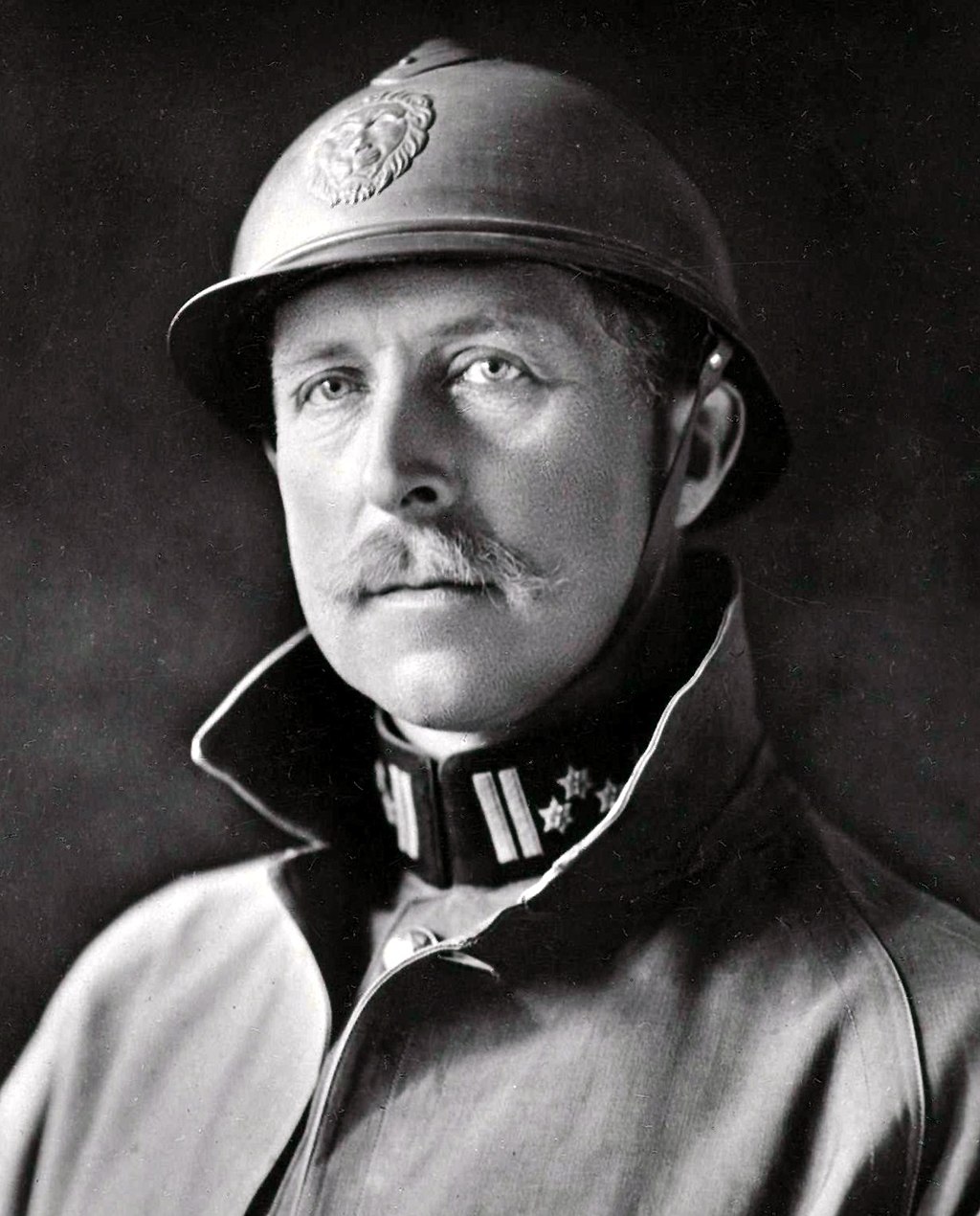
Albert I (April 8, 1875 – February 17, 1934) was King of the Belgians from December 23, 1909, until his death in 1934. He is affectionately remembered in Belgium by the epithets "Knight King" (Dutch: Koning-Ridder, French: Roi-Chevalier) or "Soldier King" (Dutch: Koning-Soldaat, French: Roi-Soldat) in recognition of his personal courage, military leadership, and refusal to abandon his army and people during World War I, when he remained with Belgian forces throughout the German occupation and became a symbol of Belgian resistance and national survival during the country's darkest hour. Albert was born in Brussels on April 8, 1875, as the fifth child and second son of Prince Philippe, Count of Flanders (the younger brother of King Leopold II), and Princess Marie of Hohenzollern-Sigmaringen, a German princess whose ancestry would create complicated loyalties when Belgium later found itself at war with Germany.
Albert was not initially expected to inherit the throne, but when his older brother Prince Baudouin died in 1891 and King Leopold II's only son died in infancy, Albert became heir presumptive to his uncle. He succeeded Leopold II—whose long reign had been tarnished by the brutal exploitation of the Congo Free State as his personal property and who died unloved and isolated—to the Belgian throne on December 23, 1909. Albert married Elisabeth of Bavaria, a German princess and accomplished musician and physician who became his devoted partner, with whom he had three children: Leopold (who would succeed him as Leopold III), Charles (who served as Prince Regent), and Marie-José (who briefly became Queen of Italy).
Albert ruled during one of the most eventful and traumatic periods in Belgian history, dominated by World War I (1914–1918), when Germany's invasion of neutral Belgium in August 1914 violated international law and brought Britain into the war while subjecting most of Belgium to brutal German military occupation for four years. When Germany demanded free passage through Belgian territory to attack France, Albert refused despite knowing that Belgian military forces were vastly outnumbered and outgunned by the German army. His decision to resist German demands and honor Belgium's neutrality obligations, even at catastrophic cost, established his reputation for principled courage and made Belgium a symbol of small nations' rights under international law being violated by great power aggression.
During the German invasion, the Belgian army fought delaying actions that slowed the German advance and disrupted the Schlieffen Plan's timetable, though at enormous cost in Belgian casualties and destruction. As German forces swept across Belgium, King Albert made the crucial decision to remain with his army and share its hardships rather than fleeing to safety in France or Britain as some advisors suggested. He personally commanded Belgian forces that retreated to a small unoccupied corner of Belgian territory around the Yser River and the medieval city of Ypres, where Belgian troops held a defensive line for the entire war, maintaining a symbolic foothold of Belgian sovereignty on national soil and keeping the Belgian army in existence as a fighting force.
Albert lived in modest field headquarters, wore military uniform daily, shared the dangers and discomforts of his soldiers, frequently visited frontline positions despite personal risk, and demonstrated the kind of personal leadership and physical courage that earned him profound respect from his troops, allies, and even enemies. His refusal to separate himself from his suffering people and his determination to resist despite overwhelming German power made Albert an international symbol of courage and resistance to aggression, celebrated in Allied propaganda and admired even in Germany, where his personal bravery earned grudging respect. His wife Queen Elisabeth also won admiration by remaining in Belgium, working as a nurse treating wounded soldiers, and refusing the safety of exile.
The royal couple's shared hardships with their people during the war created powerful emotional bonds between monarchy and nation that strengthened Belgian national unity and the monarchy's legitimacy in a country that had often been divided by linguistic, regional, and political tensions. Following Belgium's liberation and Germany's defeat in 1918, Albert participated in the Paris Peace Conference and the negotiation and adoption of the Treaty of Versailles in June 1919, which imposed harsh terms on defeated Germany including substantial reparations payments to Belgium for war damages, territorial adjustments that transferred small German border regions to Belgium, and recognition of Belgium's suffering under German occupation. Albert reportedly expressed private concerns that the treaty's harsh terms against Germany might plant seeds of future conflict, demonstrating a prescience that would be tragically vindicated twenty years later, but he accepted the reparations and territorial gains as necessary compensation for Belgium's devastation.
Other significant aspects of Albert's reign included Belgium's assumption of direct rule over the Belgian Congo following the international scandal over Leopold II's brutal exploitation of the territory as his personal possession, though Albert's colonial administration, while less overtly savage than Leopold's, continued extractive economic policies and racial segregation that oppressed the Congolese people. Belgium also received a League of Nations mandate over Ruanda-Urundi (modern-day Rwanda and Burundi), former German colonies in East Africa, expanding Belgium's colonial empire at a time when most of Europe's empires had reached their territorial zenith. Domestically, Albert oversaw the massive reconstruction of Belgium following the war's devastation, which had destroyed much of Belgian infrastructure, industry, and housing in occupied territories.
This reconstruction was financed partly by German reparations but also required enormous Belgian efforts and investment. Albert also presided over the introduction of universal male suffrage and progressive social reforms that expanded political participation and workers' rights, responding to social pressures unleashed by the war. The final years of Albert's reign coincided with the beginning of the Great Depression following the 1929 Wall Street Crash, which hit Belgium's export-dependent economy hard and created rising unemployment, business failures, and social distress that Albert's government struggled to address through the early 1930s.
However, Albert would not live to see the Depression's full impact or the rise of fascism that was transforming European politics during this period. Albert died on February 17, 1934, in a mountaineering accident near Marche-les-Dames in eastern Belgium, falling to his death while rock climbing alone—an activity he had pursued as a hobby despite its dangers and despite being fifty-eight years old. The circumstances of his death generated various conspiracy theories, though official investigations concluded it was a tragic accident resulting from a fall while climbing.
His sudden death shocked Belgium and the world, cutting short a reign that had transformed the Belgian monarchy's status from a somewhat tenuous institution under the controversial Leopold II into a deeply respected symbol of national courage and unity through Albert's wartime leadership. Albert was succeeded by his son Leopold III, whose reign from 1934 to 1951 would prove far more controversial than his father's, as Leopold's actions during World War II—including his decision to surrender to Germany in 1940 and remain in occupied Belgium rather than forming a government-in-exile—would create a constitutional crisis and a bitter national division that contrasted sharply with the national unity and admiration that Albert I had achieved through his very different response to German invasion a generation earlier. Albert I thus remains one of Belgium's most beloved monarchs, remembered as the king who embodied Belgian courage and national survival during the country's greatest crisis and whose personal example of duty, courage, and shared sacrifice with his people established a standard of royal conduct that subsequent Belgian monarchs have been measured against but rarely equaled.