Agogwe
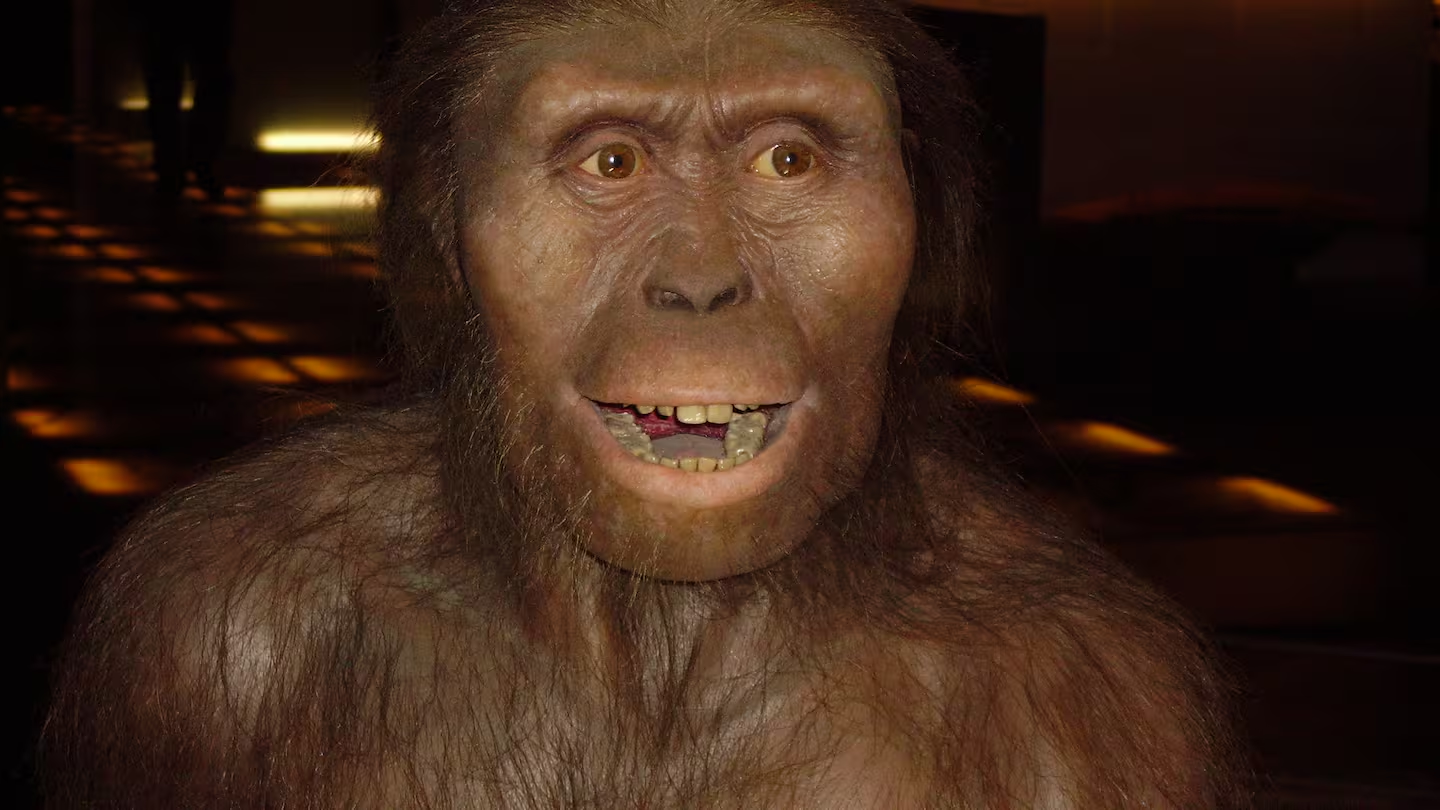
The Agogwe was an enigmatic and elusive purported bipedal creature of East African folklore, traditionally described as a small, human-like being that inhabited the dense forests of Tanzania and Mozambique. As a primary figure in the regional "hidden hominid" traditions, it was most famously depicted as standing approximately four to five feet tall, entirely clad in a thick coat of russet or brown hair. The origin of this mysterious figure in the Western record traces back to the early 20th century, most notably through the testimony of Captain William Hichens, who encountered the creatures in the Ussure and Simibit forests while on an official hunt.
According to Hichens, his local guide gazed upon the beings in "mingled fear and amazement," identifying them as the agogwe—rare, furry men who represent a legendary presence that one might not see once in a lifetime.
The historical narrative of the Agogwe is further enriched by the accounts of travelers such as Cuthbert Burgoyne, who in 1927 observed similar entities walking gracefully among a troop of baboons on the coast of Portuguese East Africa. This specific behavior suggested a unique ecological niche, as the creatures appeared to coexist peacefully with known primates while maintaining a distinct, upright, and "graceful" human-like gait. Other sightings from the era described small "families" of Agogwe—consisting of a mother, father, and child—further cementing the image of a reclusive, primitive social structure hidden within the bush.
These accounts often emphasized that local hunters held a profound respect or taboo regarding the beings, frequently forbidding outsiders from shooting at them.
Despite the vividness of these early 20th-century reports, no physical evidence of the Agogwe has ever been recovered, and confirmed sightings effectively ceased after 1927. This lack of empirical data has led many researchers to suggest that the sightings likely involved misidentified primates, such as exceptionally large baboons or undiscovered subspecies of monkeys. Whether viewed as a biological remnant of an ancient hominid line or a product of folkloric exaggeration, the Agogwe remains a primary example of the "wild man of the woods" motif, personifying the deep-seated human fascination with the mysterious and blurred boundaries between humanity and the animal kingdom.