Actaeon
In Greek mythology, Actaeon (/ækˈtiːən/; Ancient Greek: Ἀκταίων Aktaiōn) was the son of the priestly herdsman Aristaeus and Autonoe of Boeotia, and a celebrated hero of Thebes. Through his mother, he belonged to the ruling House of Cadmus. Like later heroes such as Achilles, Actaeon was trained in hunting and combat by the centaur Chiron.
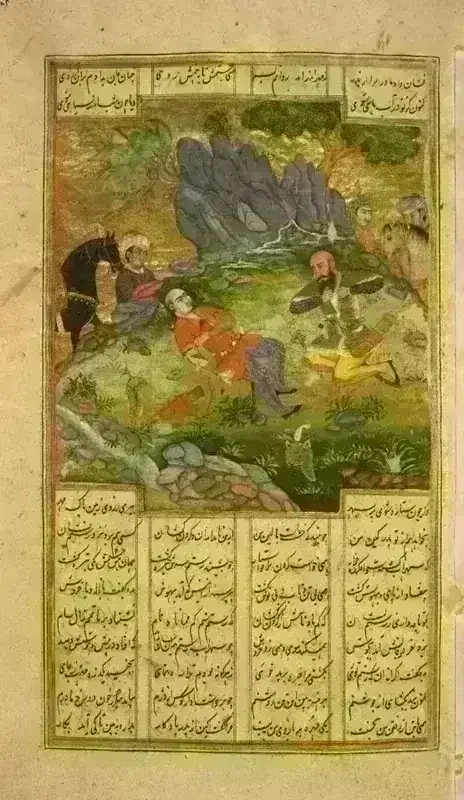
Actaeon met a tragic fate due to the wrath of Artemis (later associated with her Roman counterpart, Diana). Accounts differ on the exact cause of his transgression, but all agree on the outcome: the hunter became the hunted. He was transformed into a stag, and his own hunting dogs, driven into a frenzy, tore him apart.
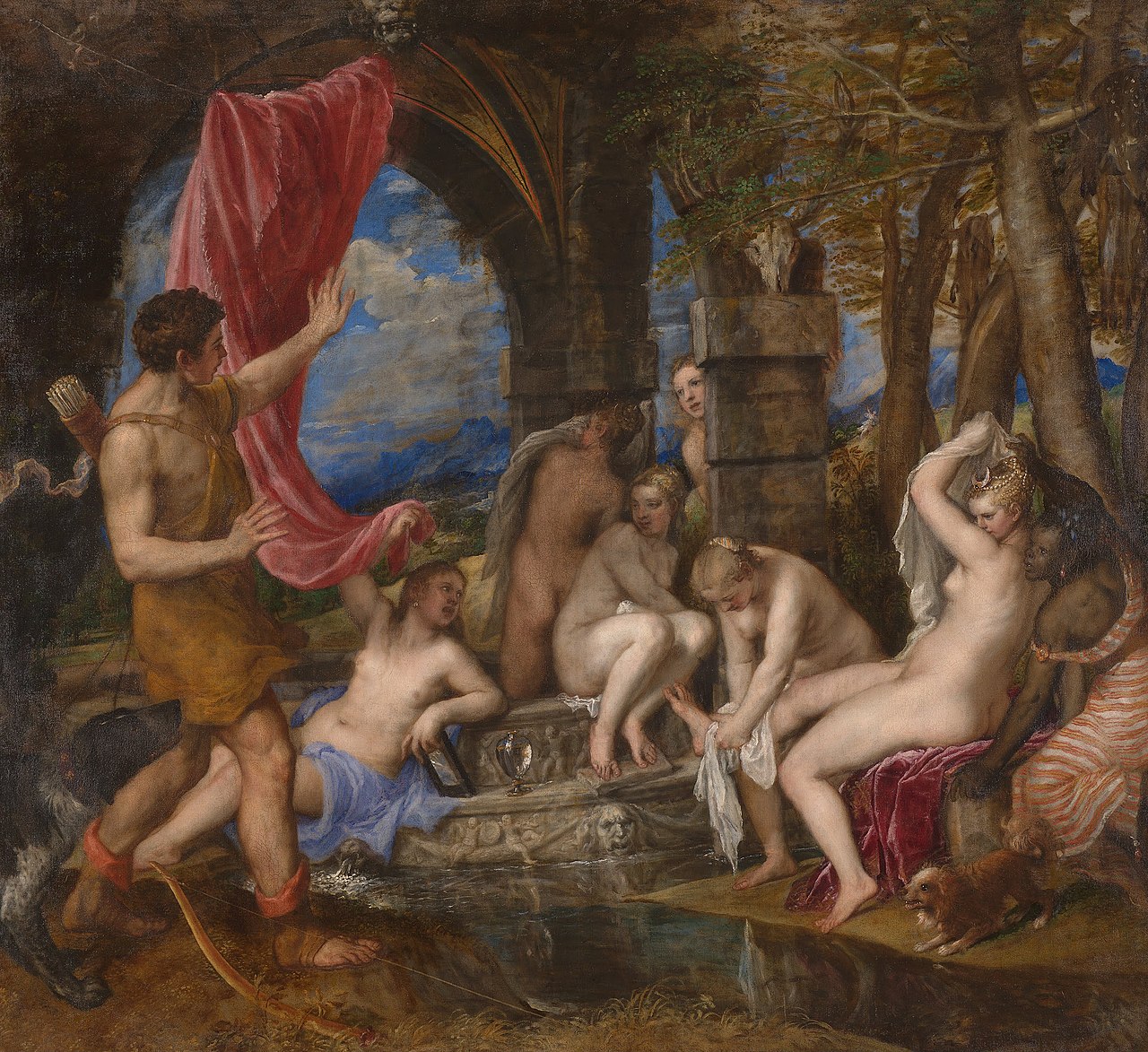
Artistic depictions from antiquity through the Renaissance typically show either the moment of his transgression and transformation or his death at the jaws of his hounds. Scholar John Heath notes that the core of the tale is unchanging: “A hunter transforms into a deer and is killed by his hunting dogs,” while authors were free to offer differing motives for his punishment.
The version popularized by the Hellenistic poet Callimachus presents Artemis bathing in the woods when Actaeon stumbled upon her, witnessing her naked beauty. Astonished, he paused to look. Offended, Artemis exacted her revenge: she forbade him from speaking, warning that if he attempted to do so, he would be transformed into a stag.
When Actaeon called out to his hunting party, the spell took effect. In his new form, he fled into the forest, saw his reflection in a pond, and groaned at his fate. His own hounds, failing to recognize their master, pursued him.
Actaeon raised his eyes toward Mount Olympus in a final plea for mercy, but the gods ignored him, and he was torn to pieces. In some later embellishments, the hounds’ grief led Chiron to create a lifelike statue of Actaeon, which temporarily appeased them.
The Roman poet Ovid recounts a similar story in which Actaeon, while hunting on Mount Cithaeron, accidentally saw Diana bathing. She transformed him into a stag, and he was pursued and killed by his fifty hounds. Callimachus’ Fifth Hymn parallels this with the myth of Tiresias being blinded for seeing Athena bathing.
Much of the literary record of Actaeon’s myth has been lost, but scholar Lamar Ronald Lacy used surviving fragments and vase-painting evidence to reconstruct a coherent version. Lacy challenges earlier assumptions that the myth evolved linearly from archaic depictions of Actaeon pursuing Semele, to classical portrayals of him boasting of hunting prowess, to Hellenistic versions of him glimpsing Artemis’ bath. He identifies the site of Actaeon’s transgression as a spring sacred to Artemis at Plataea, where Actaeon functioned as a hero archegetes, or “founding hero.” In this reconstruction, the righteous hunter, a companion of Artemis, attempted to make himself her consort after seeing her naked in the sacred spring.
His punishment, therefore, also reflects the ritual expectation of deference owed to Artemis by hunters.