Abzû
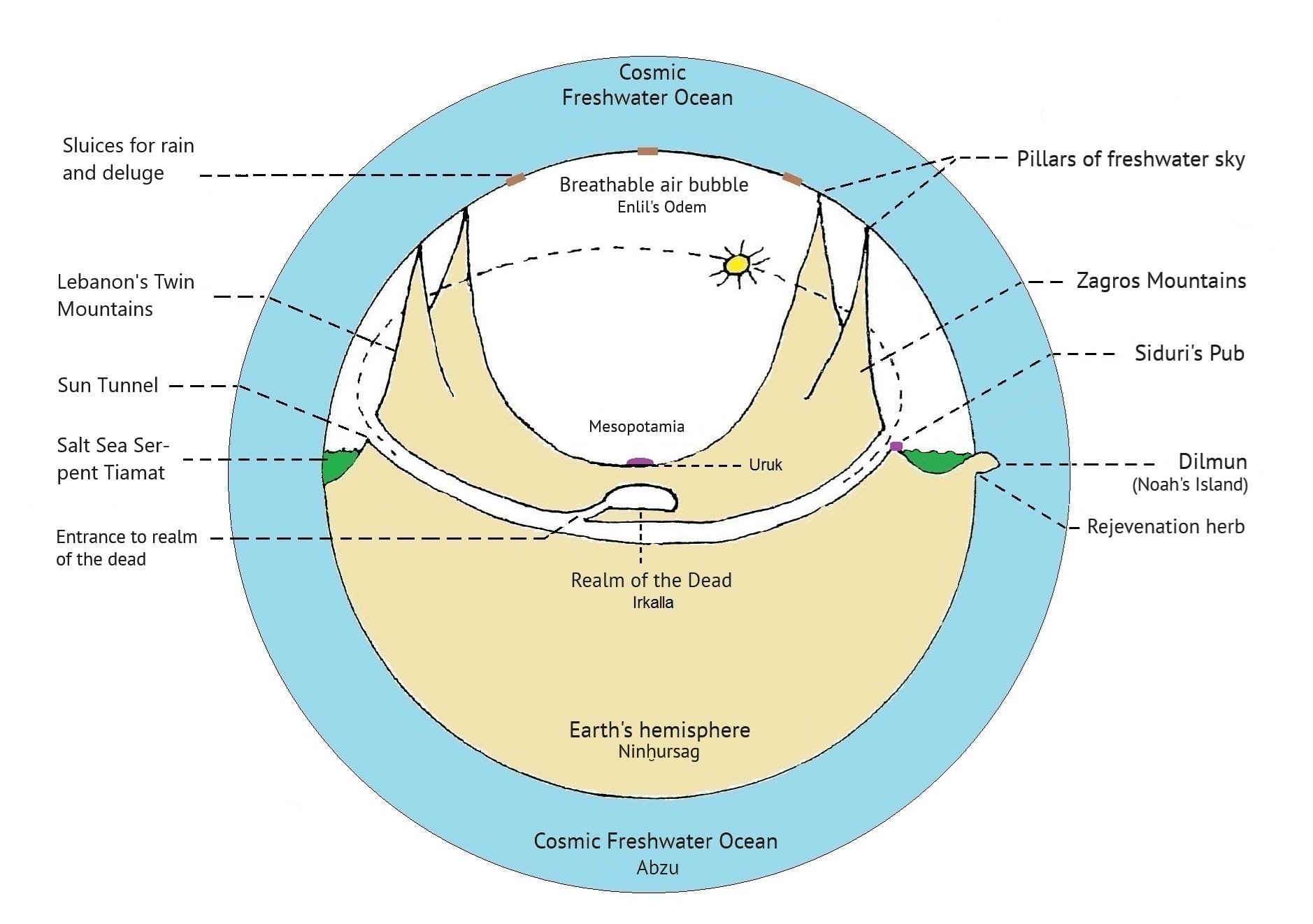
The Abzû, also known as the Apsû in Akkadian, refers to the primordial realm of fresh water from underground aquifers that held a sacred, fertilizing quality in ancient Near Eastern cosmology. In Mesopotamian creation myths, this freshwater ocean was personified as a male deity who mated with the saltwater goddess Tiamat to bring about the birth of the earth goddess Ninhursag, establishing the Abzû as a foundational element of the universe that existed both above and below the physical world. Ancient Sumerians and Akkadians believed that every source of life-sustaining water, including lakes, springs, rivers, and even the rain and the Great Flood, originated from this deep subterranean reservoir.
The world was envisioned as being surrounded by the Abzû, with the earth's surface providing a pocket of breathable air while its interior housed the realm of the dead, known as Irkalla. This mystical domain served as the divine home of Enki, the god of wisdom, who resided there alongside his wife Damgalnuna, his mother Nammu, and a court of subservient beings such as the advisor Isimud and the gatekeeper Lahmu. Enki’s primary sanctuary in the city of Eridu was appropriately named E-abzû, or the "house of the deep waters," reflecting the temple's location at the edge of the marshes.
Beyond its mythological status, the term was also applied to the holy water tanks found in the courtyards of Babylonian and Assyrian temples, which were used for ritual purification in a manner strikingly similar to a Jewish mikvah or a Christian baptismal font.