Abrskil
Abrskil, also known as Abrskila, is the central hero of the Abkhazian national epos and is often likened to Prometheus, earning him the title of the Abkhaz Prometheus. According to legend, he was born out of wedlock to a beautiful woman named Abkhazia and grew into a bold, handsome man of immense strength and ambition. Unlike others, he lived wild and free, riding his beloved horse Arasch with unmatched skill and hurling great stones while mounted.
His daring and defiance gave him the image of a Robin Hood figure among his companions. Yet his pride was boundless, for he declared himself equal to God and believed he could accomplish anything the divine could. Moving effortlessly between mountains and sea, Abrskil seemed invincible.
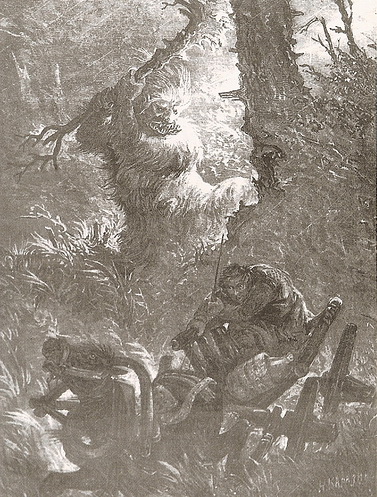
God, angered by his cruelty toward people and his destruction of the forests, commanded him to repent, but Abrskil refused. In response, God sent angels known as afehambres to capture him. Using his bludgeon, the alabasha, Abrskil swung from mountainsides like a wild man, eluding pursuit time and again. Finally, the angels devised a trap by spreading slick cowhides along the shore. When Abrskil leapt down on Arasch, his horse slipped, sending him crashing to the ground. Woodpeckers shattered his alabasha, robbing him of escape, and he was bound in the hides and dragged away.
The angels imprisoned him in a cave near the village of Otap, where he was chained to a pillar and his horse tied to a post. For seven days he struggled to break free, striking even at a bird that mocked him, only to have his hammer lodge in the stone. Helpless, Abrskil remained trapped, while the cave, littered with his horse’s droppings, became known as achuats tizgo—the “place of horse’s dung.” Though his friends tried to rescue him, he never escaped, and the people rejoiced at his downfall.
The legend of Abrskil was not confined to Abkhazia alone. Ancient Greeks, familiar with the warlike seafarers of the Black Sea coast known as the Heniochi—ancestors of the Abkhazians—wove echoes of his story into their own mythology, reshaping him as Prometheus. Both figures defied the gods, both suffered divine punishment, though Prometheus was chained to a mountain and tormented by eagles while Abrskil was bound in a cavern.
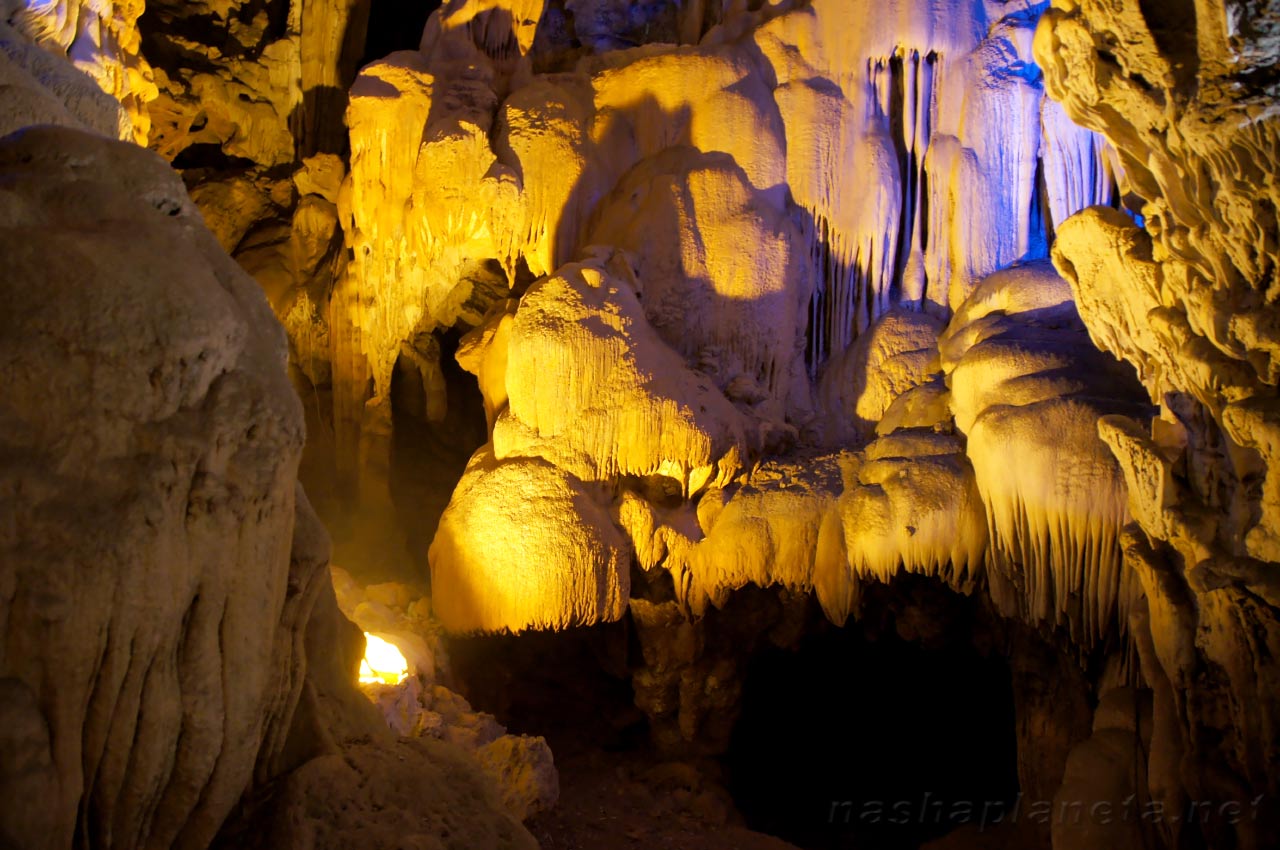
Today, Abrskil’s prison is remembered as Abrskil Cave, a karst cavern stretching nearly two kilometers, adorned with stalactites and stalagmites, and open in part to visitors who still walk through the chambers of the hero’s eternal confinement.